 By
By 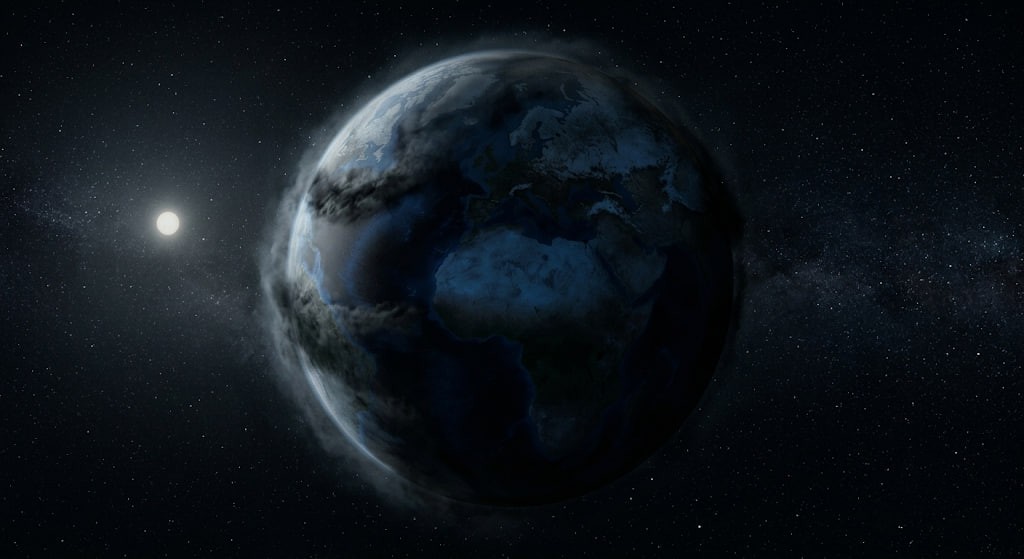
Quick Answer
Nuclear winter is the severe, worldwide cooling that scientists predict would follow a large nuclear war. The fireballs would ignite vast firestorms in cities, lofting millions of tonnes of black soot high into the stratosphere, where it would spread around the globe and block sunlight for years. The result would be a sharp drop in temperatures, failed harvests, and the threat of mass famine far from any battlefield.
First proposed in the 1983 TTAPS study led by Carl Sagan and colleagues, the theory has been refined by modern climate models — though the exact severity remains scientifically debated.
The bombs themselves are only the beginning. The truly global danger of nuclear war lies not in the blasts or even the radiation, but in the smoke — and in what that smoke would do to the sky. This is the idea behind nuclear winter, one of the most consequential scientific concepts of the twentieth century, credited with helping pull the superpowers back toward arms control.
This guide explains what nuclear winter actually is, the chain of events that would cause it, how cold and dark the world might become, why famine rather than fire would be the great killer, and how the science has been tested, criticised, and refined over four decades. Throughout, it treats the genuine scientific debate honestly, because the uncertainty is part of the story.
What Is Nuclear Winter?
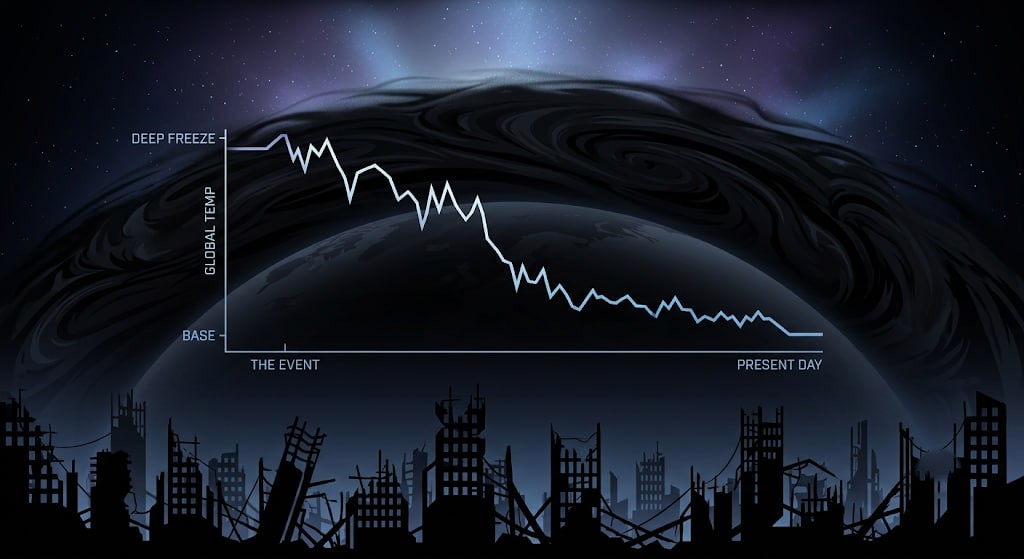
Nuclear winter is a predicted global climatic catastrophe in which smoke from the fires of a nuclear war blocks sunlight worldwide, plunging the planet into a prolonged, severe cold. It is not caused by the explosions directly, nor by radioactive fallout, but by soot — fine black carbon particles from burning cities — rising into the upper atmosphere and staying there for years.
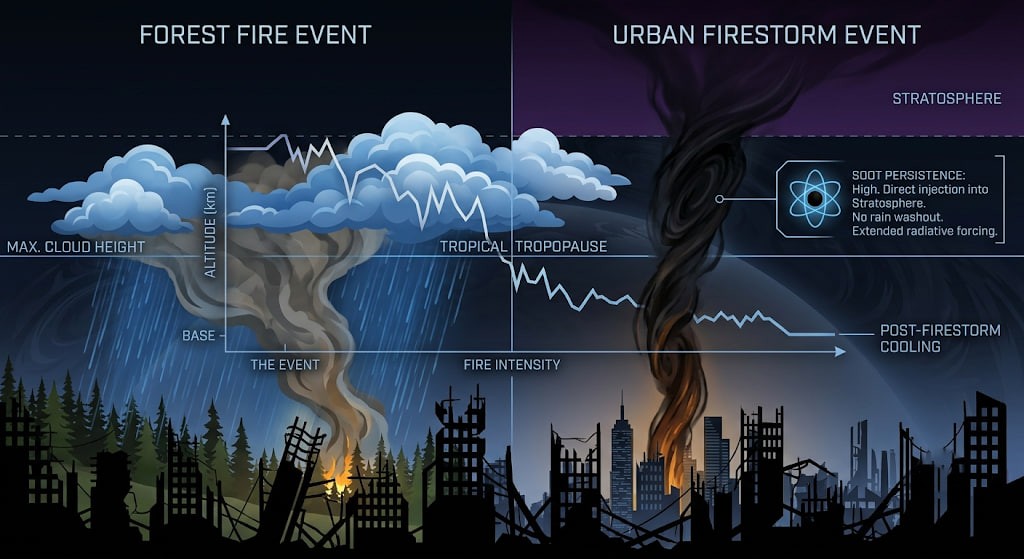
The key distinction is between an ordinary war’s smoke and this. Smoke at low altitudes rains out within days. But the immense heat of urban firestorms can punch soot all the way into the stratosphere, the dry, stable layer above the weather, where there is no rain to wash it out. Once there, it lingers and spreads across the globe. The detonations that would start it all rely on the physics of nuclear fission, but nuclear winter is fundamentally a story about the atmosphere, not the bomb. The full thought experiment of every warhead going off at once is explored in our scenario, what if all nuclear weapons detonated at once.
In short, the bombs light the match, the cities provide the fuel, and the stratosphere becomes a planet-wide shade that can last for years. That is the essence of nuclear winter, and every detail below follows from it.
The Mechanism: From Firestorm to Frozen Sky
Understanding nuclear winter means following a chain of physical events, each step amplifying the last. It is a cascade, not a single bang.
Step 1: Firestorms in the Cities
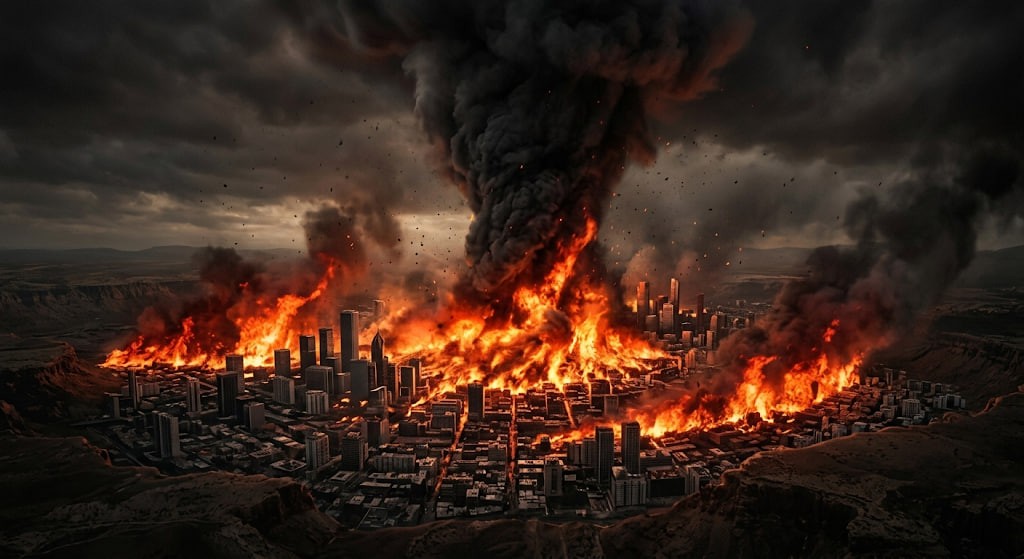
A nuclear detonation over a city ignites everything flammable across a vast area at once — buildings, fuel, vegetation. When many fires merge, they create a firestorm: a single, self-feeding inferno that draws in air with hurricane-force winds and burns with ferocious intensity. Such firestorms are not hypothetical; they consumed Hiroshima, and conventional bombing produced them in Hamburg, Dresden, and Tokyo during the Second World War. A modern city hit by a nuclear weapon would burn far more fiercely.
Step 2: Soot Punches into the Stratosphere
The fierce updraft of a firestorm lifts its smoke far higher than an ordinary fire. The black soot rises into and above the top of the weather layer, reaching the stratosphere tens of kilometres up. This is the crucial threshold: below it, rain cleanses the air in days; above it, there is no rain at all.
Step 3: The Soot Lifts Itself Higher
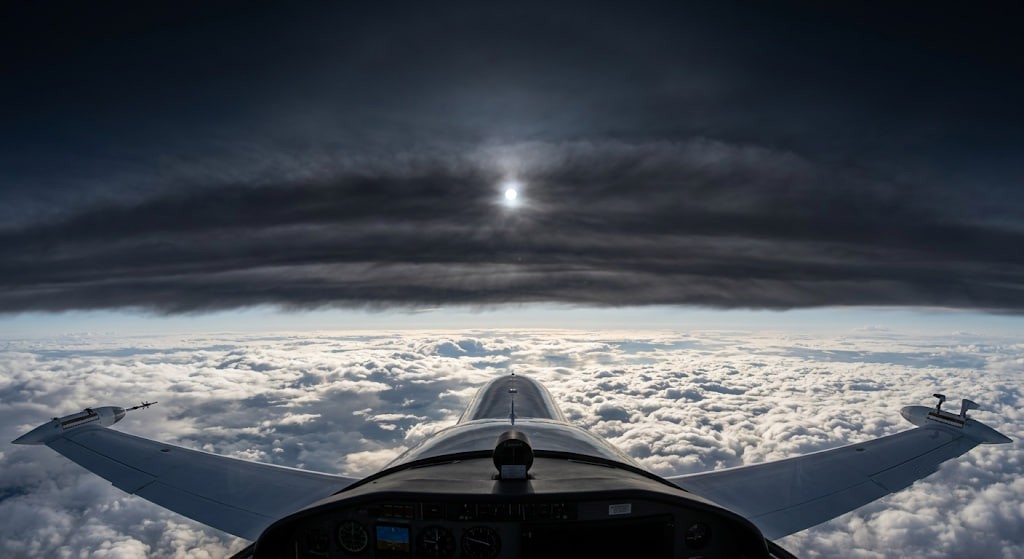
Here is the insidious part. Black soot absorbs sunlight and heats the air around it, causing the smoke layer to rise on its own — a process called self-lofting — climbing even higher into the stratosphere and extending how long it will stay aloft. Sunlight that should warm the surface is instead captured high above, warming the stratosphere while the ground below falls dark.
Step 4: A Global Veil for Years
Stratospheric winds spread the soot around the planet within weeks, wrapping both hemispheres in a thin, dark haze. With no rain to remove it, the veil can persist for several years, steadily blocking a fraction of incoming sunlight. The whole world, including nations that fired no weapons and were never targeted, sits beneath the same darkened sky.
The 1983 TTAPS Study That Named It
The concept was crystallised in a landmark 1983 paper in the journal Science, authored by Richard Turco, Owen Toon, Thomas Ackerman, James Pollack, and Carl Sagan — known ever since by their initials, TTAPS. It was this study that coined the phrase “nuclear winter” and put hard numbers to a fear that had been only vaguely sensed.
There is a remarkable twist in how it was done. The climate model the team used was not built for war at all; Pollack and Toon had spent years at NASA developing it to study the great dust storms that periodically shroud Mars — storms that cool the Martian surface by blotting out the Sun. Realising that soot from burning cities could do the same to Earth, they turned a tool for understanding another planet onto the fate of our own.
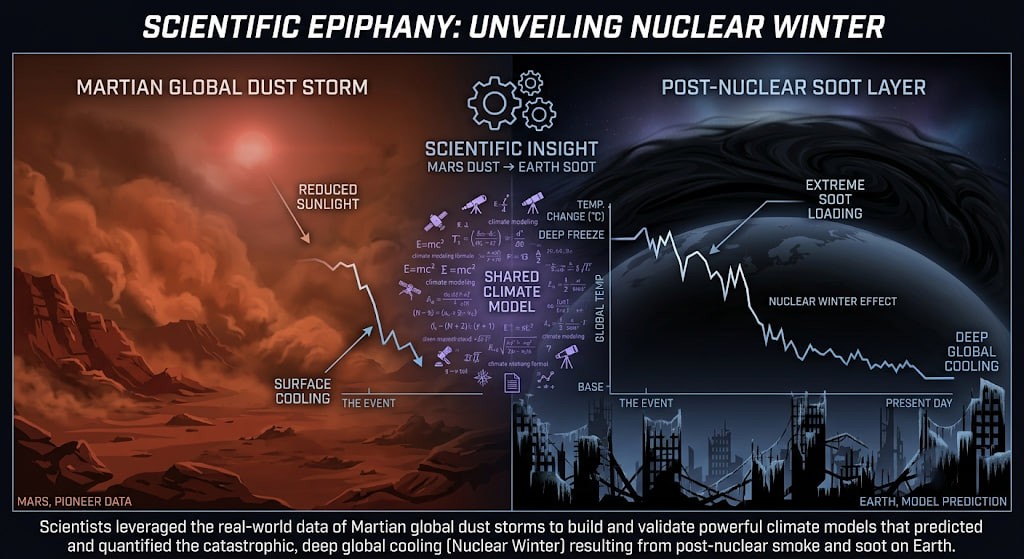
The results were stark enough to reshape geopolitics. The study modelled a range of nuclear exchanges and concluded that the resulting soot could drop temperatures across continental interiors by tens of degrees, with darkness and subfreezing cold persisting even through summer. Published as the Cold War still raged, the findings reportedly unsettled leaders on both sides — and are often credited with adding urgency to the arms-control talks between Reagan and Gorbachev. Few scientific papers have had such direct political weight.
The Cold War Legacy
Few scientific ideas have moved history as directly as nuclear winter did. When TTAPS appeared in 1983, the world’s two superpowers held tens of thousands of warheads between them, and strategy still spoke of “winnable” nuclear wars. The theory undercut that logic at a stroke: if the smoke from your enemy’s burning cities would darken your own skies and starve your own people, then even a successful first strike could be suicidal.
Carl Sagan, already a famous science communicator, carried the message to the public and to policymakers, framing nuclear winter as a reason the arms race was not just dangerous but self-defeating. The idea reverberated on both sides of the Iron Curtain and is widely credited with adding moral and practical urgency to the arms-control negotiations between Ronald Reagan and Mikhail Gorbachev later in the decade. Reagan himself referenced the prospect that a nuclear war could not be won and must never be fought.
The episode remains a striking case study in how science can shape policy — and also how it can become politicised. Critics accused proponents of overstating certainty to advance disarmament, while defenders argued the stakes justified sounding the alarm even amid uncertainty. Both the science and the controversy are part of nuclear winter’s legacy, and both still echo whenever the theory is invoked today.
How Cold, How Dark, How Long?
The severity of a nuclear winter depends overwhelmingly on one number: how much soot reaches the stratosphere, measured in teragrams — millions of tonnes. This single quantity drives everything, and it is also the most uncertain part of the science.
- Around 5 Tg (a regional war): roughly 5 million tonnes of soot, as might come from a India–Pakistan exchange — enough to cool global average temperatures by over 1°C for years and disrupt harvests worldwide.
- About 150 Tg (a full US–Russia war): modern models suggest global temperatures colder than any in the past 1,000 years, growing seasons shortened by weeks, and effects lasting a decade or more.
- The original TTAPS worst case: continental cooling of 20–35°C and prolonged darkness — figures later argued by critics to be too severe by roughly a factor of two.
To put a temperature drop of even a few degrees in perspective, the difference between today’s climate and the depths of the last Ice Age was only about 5°C in global average. A large nuclear winter would impose a comparable shock, but in months rather than millennia — far too fast for ecosystems or agriculture to adapt. The darkness matters as much as the cold: dimmer sunlight cripples photosynthesis, the engine of nearly all food production on Earth.
Nuclear Famine: The Real Killer
The grimmest insight of nuclear winter research is that most of the deaths would come not from blast, fire, or radiation, but from starvation — and largely among people on the far side of the world from any explosion. Colder temperatures, shorter growing seasons, and dimmer light would slash crop yields across the planet’s main agricultural regions at the same time.
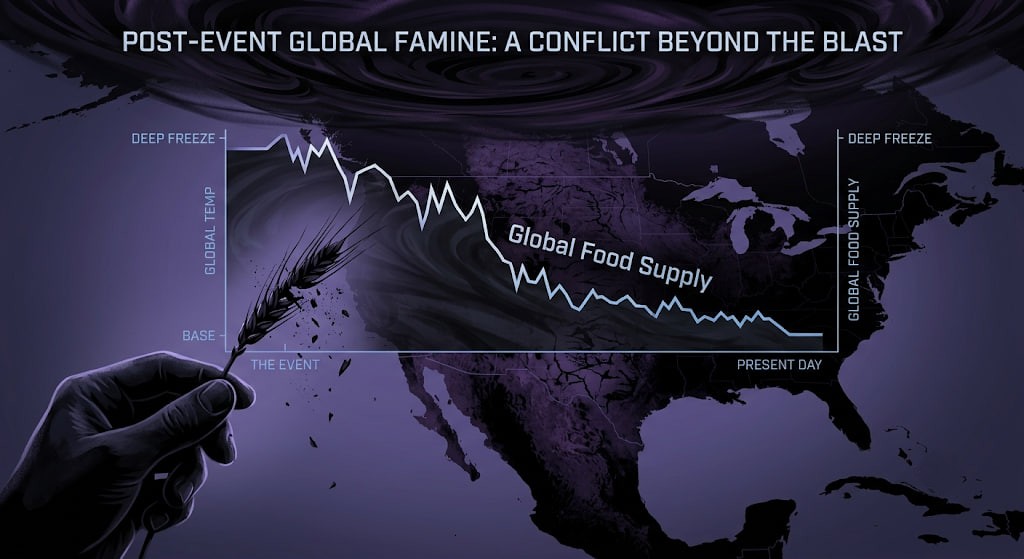
The most detailed modern estimate came in a 2022 study in Nature Food led by Lili Xia and Alan Robock, which coupled nuclear-winter climate models to global crop and fishery simulations. Its conclusions are sobering. A full-scale war between the United States and Russia, injecting around 150 teragrams of soot, could cut staple crop production so severely that more than five billion people — most of humanity — could die of famine in the following years.
Even a comparatively “limited” regional war could put up to two billion at risk. Production of corn, soybeans, rice, and wheat would fall by double-digit percentages for years, and global food trade, on which many nations depend, could collapse.
There is a further atmospheric danger layered on top. The same soot that heats the stratosphere would accelerate the destruction of the ozone layer, letting through more harmful ultraviolet radiation once the smoke eventually thinned — damaging crops and human health precisely when survivors could least afford it. Famine, not fire, is why nuclear winter is considered a threat to human civilisation as a whole.
More Than Just Cold
Temperature is only the headline effect. A nuclear winter would assault the biosphere on several fronts at once, and the combination is what makes it so dangerous. The darkness itself is a direct blow to life: dimmer sunlight slows photosynthesis on land and starves the microscopic plankton at the base of the ocean food web, undermining food production from two directions simultaneously.
The water cycle would falter too. Cooler land and weakened heating disrupt the great monsoon systems that water much of Asia and Africa, so a nuclear winter would also bring a “nuclear drought” — sharp drops in rainfall over regions that feed billions. And in the upper atmosphere, the soot that warms the stratosphere would speed chemical reactions that destroy ozone. As the smoke finally thinned after a few years, the damaged ozone layer would let through a surge of harmful ultraviolet radiation, sunburning crops, harming people and animals, and further stressing ecosystems already reeling from cold and hunger.
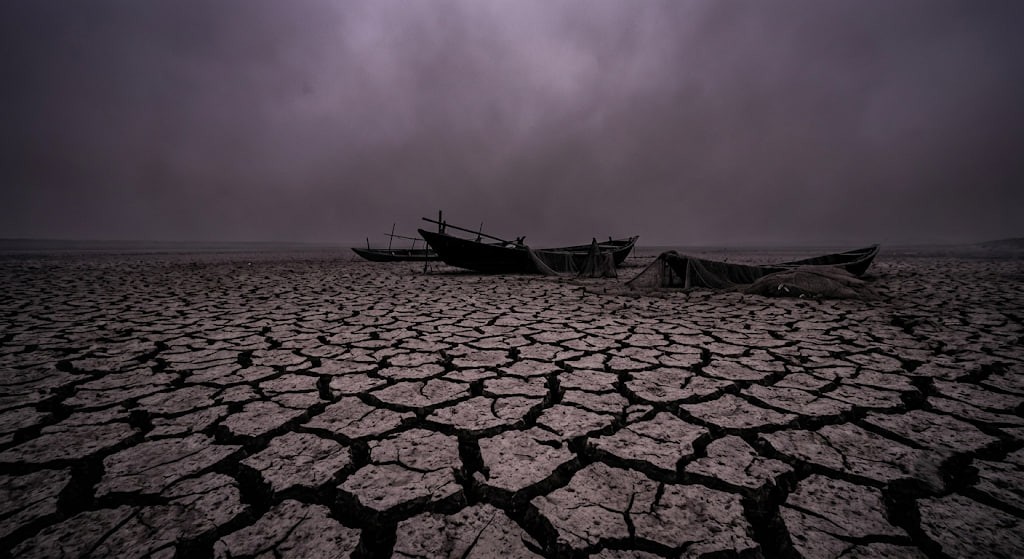
Cold, darkness, drought, and radiation would arrive not one at a time but together — a compounding emergency with no clean recovery, and the reason researchers describe nuclear winter as a threat to the living systems the whole planet depends on.
A Regional War Could Be Enough
One of the most important shifts in modern understanding is that you do not need a superpower apocalypse to trigger global consequences. Early debate often assumed nuclear winter required tens of thousands of warheads. Newer modelling suggests that even a regional nuclear war — the scenario most often studied is India versus Pakistan — using around 100 weapons against cities could loft enough soot to cool the entire planet and damage harvests for years worldwide.
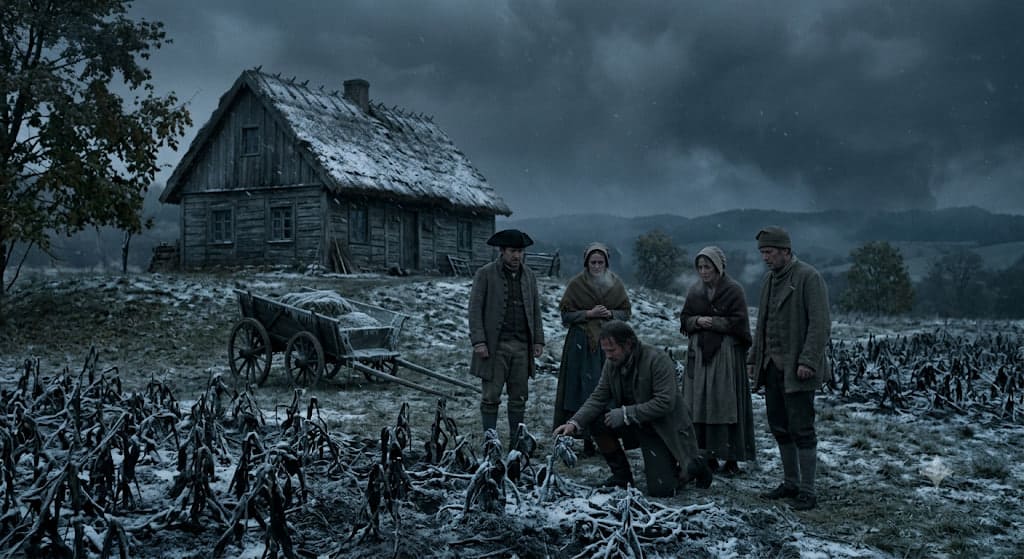
This matters because such a war is, regrettably, more plausible than a full US–Russia exchange, and because it means the climatic risk of nuclear weapons is not confined to the largest arsenals. A conflict between regional powers, fought entirely in one part of the world, could still shorten growing seasons in distant countries and put hundreds of millions at risk of hunger. Nuclear winter, in other words, makes every nuclear arsenal a potential threat to every nation on Earth.
What Survivors Would Face
To grasp nuclear winter on a human scale, it helps to follow the timeline a survivor far from the blasts might live through. In the first days, the war itself would dominate the news — the cities destroyed, the casualties, the fallout warnings. The climatic catastrophe would arrive more quietly, and for most of the world it would be the deadlier phase.
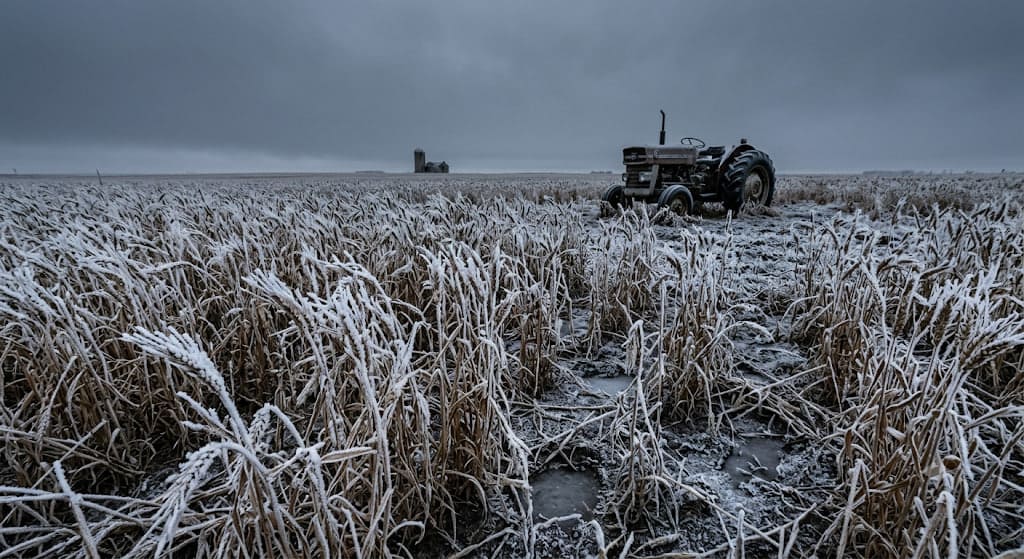
Within weeks, as the soot spread overhead, skies would dim and temperatures would begin to fall, even in midsummer. Crops in the field would be hit by sudden frosts and failing light; the next planting season might fail entirely. For a year or two the world would be colder, darker, and drier, with monsoon rains weakened and growing seasons cut short across the great agricultural belts. The immediate danger to billions would not be radiation but the simple arithmetic of food: global grain reserves hold only a few months’ supply, and once they were exhausted with no harvest to replace them, mass starvation would follow.
The burden would fall unevenly. Continental interiors, which cool fastest and farthest, would suffer the sharpest crop losses, while coastal regions and the Southern Hemisphere — with more ocean to buffer the temperature swing and access to fisheries — would likely fare somewhat better. Nations dependent on imported food would be especially exposed as global trade seized up. Social order, public health, and supply chains already strained by the war would buckle under the long emergency. None of this requires a bomb to fall on you: it is the shared sky, not the blast radius, that defines who is at risk.
Nuclear Winter’s Real-World Echoes
Nuclear winter has never happened, but nature has run smaller versions of the same experiment, and they are the strongest real-world evidence that the basic mechanism is sound. Large volcanic eruptions inject sulfur and ash high into the stratosphere, dimming sunlight and cooling the planet — a close cousin of the soot effect.
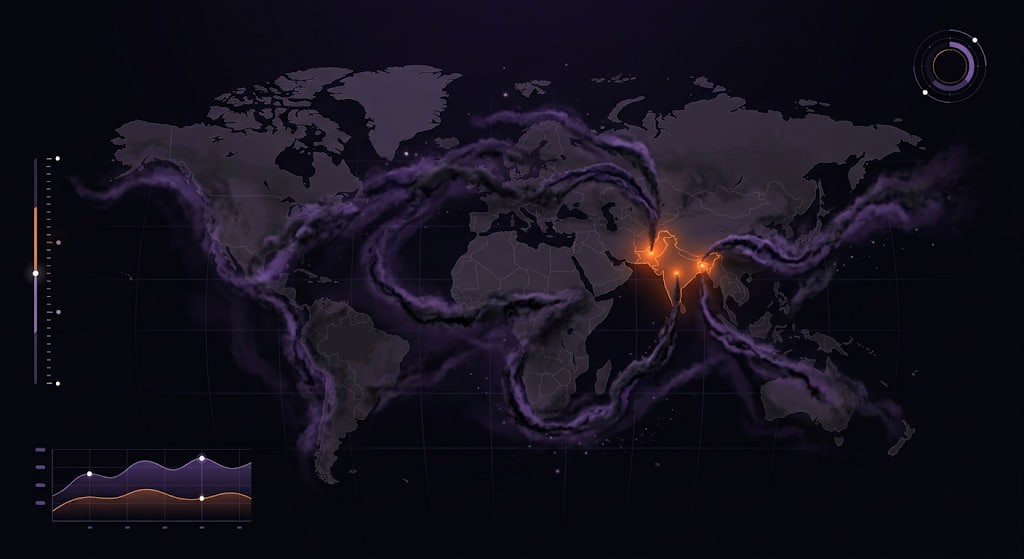
The clearest modern example is Mount Pinatubo in 1991, whose eruption cooled global average temperatures by roughly half a degree Celsius for a year or two — a measurable, worldwide chill from a single event. Go back further and the parallels grow starker. The 1815 eruption of Mount Tambora led to the infamous “Year Without a Summer” in 1816, when crops failed across the Northern Hemisphere, snow fell in summer in New England, and famine spread through parts of Europe.
These eruptions demonstrate, at smaller scale, exactly the chain nuclear winter describes: particles aloft, sunlight blocked, temperatures dropping, harvests failing. The difference is that black soot from firestorms absorbs sunlight far more effectively than volcanic sulfate and self-lofts higher, so a large nuclear war could, in principle, exceed even a major eruption in its climatic reach.
The Scientific Debate: How Settled Is It?
Nuclear winter has always been genuinely contested science, and an honest account must say so. The basic physics — that soot blocks sunlight and cools the surface — is not in dispute. The fierce arguments are about magnitude: how much soot a nuclear war would actually produce, how high it would rise, and how long it would stay.
Criticism arrived quickly. In 1986, the atmospheric scientist Joyce Penner showed that published estimates of smoke properties varied so widely that the predicted effect could be anywhere from negligible to catastrophic, depending on which numbers one chose. That same year, a study from the U.S. National Center for Atmospheric Research suggested the cooling would be milder than TTAPS claimed — a “nuclear autumn” rather than a deep winter. The physicist S. Fred Singer became a prominent, persistent critic, debating Sagan publicly. Many researchers came to accept that the original one-dimensional model had likely overstated the worst-case cooling, perhaps by a factor of two, and that processes like soot clumping and partial rain-out were not fully captured.
The debate did not end there; it evolved. From the 2000s onward, Alan Robock, Brian Toon, and colleagues re-examined the question using sophisticated three-dimensional climate models — the same kinds used to study global warming — and found that significant, dangerous cooling still resulted, especially from the self-lofting of soot. More recently, some scientists, including a team at Los Alamos, have argued that firestorms might inject far less soot than Robock’s group assumes, which would sharply reduce the effect; Robock and Toon have rebutted these analyses in turn. The current state of the science is best summarised honestly: a major nuclear war would very likely cause serious global cooling and agricultural disruption, but the precise severity — catastrophic versus merely severe — remains an active area of research, hinging on soot quantities no one can know for certain in advance.
Could Humanity Prepare?
If deterrence ever failed, could anything soften the blow? Researchers have begun seriously studying “resilient foods” — ways to feed people when sunlight and normal agriculture collapse. The proposals include foods that do not depend on sunshine, such as mushrooms grown on dead vegetation, seaweed farmed in the milder oceans, bacteria cultured on natural gas, and sugar extracted from leaves and wood. A 2024 review of such interventions concluded that a determined, pre-planned effort could in principle feed a substantial fraction of humanity through a multi-year sunlight shortfall.
The honest caveat is that none of this exists at the scale required, and ramping it up amid global chaos would be enormously hard. Stockpiling food, hardening agriculture, and planning international cooperation in advance would all help, but every analysis returns to the same conclusion: preparation can reduce the toll, yet it cannot make a nuclear war survivable in any ordinary sense. The only reliable protection against nuclear winter is to ensure the war that causes it never begins — which is why the science has always pointed back toward prevention and disarmament.
Nuclear Winter and the Doomsday Clock
The threat sits at the heart of how scientists gauge humanity’s peril. In January 2026, the Bulletin of the Atomic Scientists set the Doomsday Clock to 85 seconds to midnight — the closest to catastrophe in its history — citing growing nuclear dangers among the leading reasons. Nuclear winter is the mechanism that makes those dangers planetary: it is why a nuclear war anywhere is, in a real sense, a threat to everyone.
That is also the hopeful flip side. Because the catastrophe depends on weapons that exist by human choice, it is, uniquely among global threats, entirely preventable. Every warhead dismantled and every conflict avoided directly reduces the risk. The science of nuclear winter was born as a warning, and its ultimate purpose has always been to make the war it describes less likely.
Q&A
Nuclear winter is the global cooling that would follow a large nuclear war. Firestorms in burning cities would send huge amounts of black soot into the stratosphere, where it would spread worldwide and block sunlight for years, dropping temperatures, darkening skies, and causing widespread crop failure and famine — even in countries far from the fighting.
The basic physics — that soot blocks sunlight and cools the surface — is well established, and modern climate models support significant global cooling from a major nuclear war. But the exact severity is genuinely debated, because it depends on how much soot would reach the stratosphere, a figure that is hard to predict. Estimates range from severe to catastrophic, and research is ongoing.
Fewer than once thought. Modern modelling suggests that even a regional war using around 100 weapons against cities — for example between India and Pakistan — could loft enough soot to cool the whole planet and disrupt harvests for years. A full US–Russia exchange involving thousands of weapons would be far more severe.
“Nuclear autumn” is the term for a milder version of the same effect. It arose in 1986 when a study argued the cooling from a nuclear war would be significant but less extreme than the original “nuclear winter” predictions. Both describe soot-driven global cooling; they differ mainly on how deep and prolonged the chill would be.
Years, not weeks. Because the soot reaches the stratosphere, where there is no rain to wash it out, it can linger for several years and spread across the globe. Modern simulations of a major war show the coldest effects lasting a few years, with growing seasons disrupted and temperatures not fully recovering for a decade or more.
Yes — that is the central danger. Nuclear winter is a global phenomenon: the soot veil cools the entire planet, so harvests fail far from any battlefield. A 2022 study estimated that a full US–Russia war could put more than five billion people at risk of starvation worldwide, the great majority of them in nations that never fired or received a single weapon.
Most scientists expect humanity would survive even a severe nuclear winter, but at a catastrophic cost. Some regions, especially in the Southern Hemisphere and coastal areas with milder cooling and access to fishing, would fare better than continental interiors. It would be a civilisation-shaking disaster threatening billions, not necessarily a human extinction event.
Globally, the cold and the famine it causes. Blast, fire, and radiation would kill enormous numbers near the targets, but those effects are largely regional. Nuclear winter’s cooling and crop failure would reach the entire planet and, according to modern studies, could kill far more people through starvation than the explosions themselves — most of them in countries never attacked.
Yes, on a smaller scale. Large volcanic eruptions inject particles into the stratosphere and cool the planet: Mount Pinatubo in 1991 lowered global temperatures by about half a degree Celsius, and Mount Tambora in 1815 caused the “Year Without a Summer,” with failed harvests and summer snow. These events confirm the basic mechanism behind nuclear winter.
It was formalised in the 1983 TTAPS study by Richard Turco, Owen Toon, Thomas Ackerman, James Pollack, and Carl Sagan, who coined the term. They adapted a climate model originally built to study Martian dust storms. Earlier researchers had noted that war smoke could cool the climate, but TTAPS first quantified the global effect.
Preparation could reduce the death toll but not make such a war truly survivable. Researchers study “resilient foods” — mushrooms, seaweed, and crops that do not need much sunlight — plus food stockpiles and emergency planning. Even so, every analysis concludes the only reliable protection is preventing nuclear war in the first place.
The Bigger Question
Nuclear winter transformed how the world thinks about nuclear weapons. It revealed that even a “winnable” war could doom the victor, the bystander, and the distant farmer alike — that the smoke from burning cities could starve continents that never heard a single explosion. The science is sobering, the uncertainties are real, and the stakes could not be higher. The ultimate version of the thought experiment — every warhead on Earth detonating together — is laid out in what if all nuclear weapons detonated at once.
To understand the reaction that powers these weapons, read nuclear fission, and to see how experts track the risk of catastrophe, explore the Doomsday Clock. Find more on existential risk on the Earth & Humanity Survival hub.
Watch the nuclear scenario to see what would really happen if the world’s entire arsenal went off at once.