 By
By What Is Panspermia — and Is It Real Science?
Panspermia is the hypothesis that life — or the precursor molecules for life — can travel between planets and even between star systems aboard cosmic dust, meteorites, asteroids, or comets. It is not fringe science. The panspermia hypothesis has been championed by Nobel laureates (Francis Crick proposed “directed panspermia” in 1973), published in peer-reviewed astrobiology journals, and is taken seriously as one of two leading explanations for how life arose on Earth — the other being purely abiotic chemistry in warm oceanic environments.
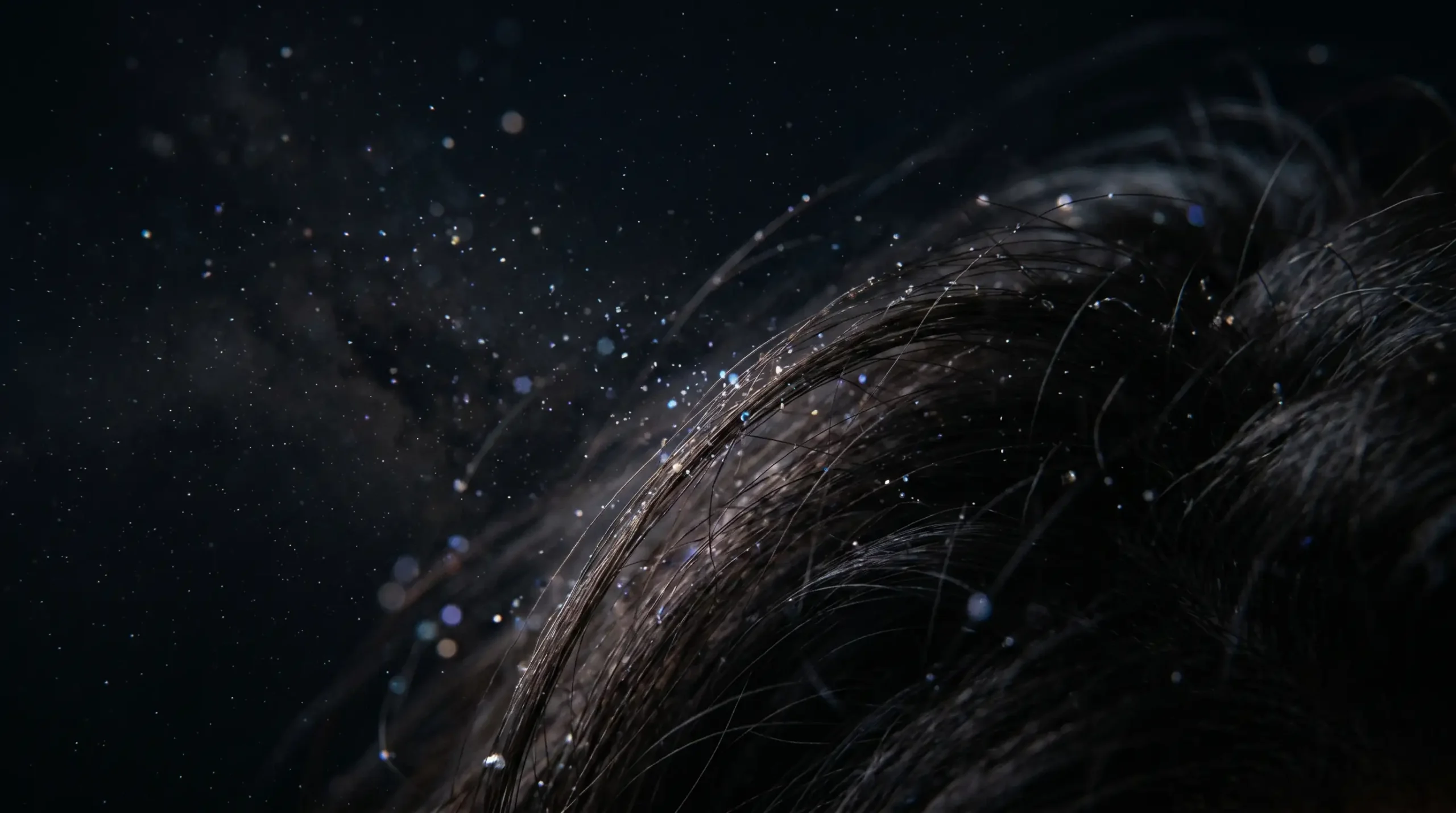
The “space dust in human hair” framing of the question comes from the fact that we are continuously bombarded by interplanetary dust particles (IDPs): tiny grains of carbon, silicate, and organics that originate from comets and asteroid collisions. Roughly 40,000 tonnes of cosmic dust fall to Earth each year. Some of this material is collected in the stratosphere; some settles onto hair, clothing, and skin. The organic molecules in IDPs include amino acids — the building blocks of proteins — and other astrobiologically interesting compounds.
Can Microorganisms Actually Survive Space?
The TARDIS and EXPOSE experiments aboard the International Space Station have directly tested whether life on other planets could survive transit through space. Key findings:
- Tardigrades (water bears) survived 10 days of direct exposure to the vacuum and ultraviolet radiation of open space in a dehydrated, cryptobiotic state.
- Bacterial spores of Bacillus subtilis survived UV exposure equivalent to transit from Mars to Earth if shielded by even a thin layer of rock.
- Simulated microorganisms in space protected by just 0.5 mm of rock could potentially survive millions of years in transit — long enough for Mars-to-Earth transfer.
- The asteroid belt and Oort Cloud contain organic molecules, including nucleobases (adenine, guanine) that are direct precursors to RNA and DNA.
The Murchison meteorite, which fell in Australia in 1969, contained over 70 amino acids — 8 of the 20 used in all terrestrial life. This confirms that the chemistry of life on other planets is not confined to Earth: it is distributed throughout the solar system.
What Would It Actually Mean to Find Alien Life in Cosmic Dust?
The panspermia hypothesis doesn’t require that microbes in space arrive on Earth fully alive — though that is one scenario. A more conservative version proposes that interstellar dust seeded the early Earth with organic molecules that then evolved into life independently. Either scenario has profound implications for astrobiology: if life on other planets originated from the same interstellar dust reservoir as Earth life, then we might find organisms with the same genetic code, the same 20 amino acids, even the same left-handed chirality (homochirality) that all terrestrial life uses.
This is the most testable prediction of panspermia: life throughout the universe, if seeded from the same cosmic source, should share biochemical signatures. Life with an entirely independent origin — using different amino acids, different chirality, perhaps a different solvent — would be the real “alien” life and would provide the strongest evidence against panspermia as a universal mechanism.
Is Panspermia Actually Proven?
No. The origin of life on Earth remains one of the deepest open questions in science. Panspermia is a credible hypothesis that solves some problems (it moves the origin-of-life problem to more ancient or more distributed environments) while creating others (how did life arise in those environments?). The most likely role for panspermia, if it occurs, is the transfer of microbial life within a single planetary system — for example, from an early wet Mars to early Earth aboard ejected rocks — rather than between star systems, where transit times run to millions of years and radiation doses become extreme.
The discovery of microorganisms in space — truly extraterrestrial biology — remains the open question of modern astrobiology. Current missions to Europa’s ocean and Enceladus’ geysers may provide the first answer.
Q&A
Panspermia is the scientific hypothesis that life — in the form of microorganisms, spores, or organic precursor molecules — can be transferred between planets and potentially between star systems by cosmic dust, meteorites, comets, or asteroids. It is a mainstream astrobiology hypothesis, not a fringe theory.
Yes, in protected forms. Tardigrades have survived open-space exposure for at least 10 days. Bacterial spores protected by even a millimetre of rock can withstand UV and vacuum for much longer. Rock-shielded spores could theoretically survive a Mars-to-Earth transit of millions of years, though the radiation dose over such timescales remains an open question.
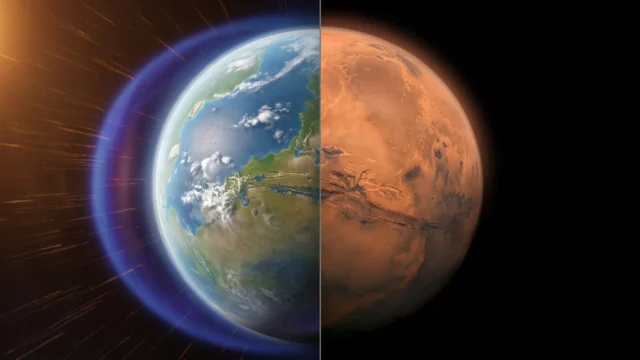
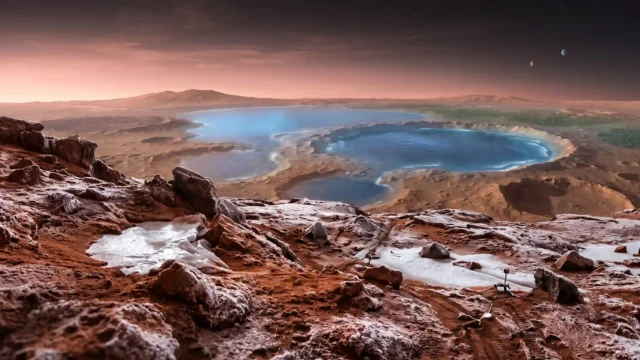
Possibly, via a process called lithopanspermia — transfer of life aboard ejected rocks between planetary surfaces. Mars was once wetter and warmer than Earth, and Martian rocks have been found on Earth’s surface. If Mars had life first, it could have seeded Earth billions of years ago. This is unproven but scientifically plausible.
Astrobiology is the scientific study of the origin, evolution, and distribution of life in the universe. It combines biology, chemistry, geology, and astronomy to investigate whether life exists or could exist beyond Earth — including on ocean moons, Mars, exoplanets, and in interstellar space.
Interstellar dust and meteorites contain amino acids, sugars, nucleobases (the building blocks of DNA and RNA), and complex polycyclic aromatic hydrocarbons. The Murchison meteorite alone contained over 70 amino acids. Molecular clouds throughout the galaxy contain ethanol, formaldehyde, glycolaldehyde (a simple sugar), and other biologically relevant molecules.
Internal links: space facts | What If a Rogue Star Ejected Earth? | What If the Sun’s Magnetic Field Flipped Tomorrow?