 By
By 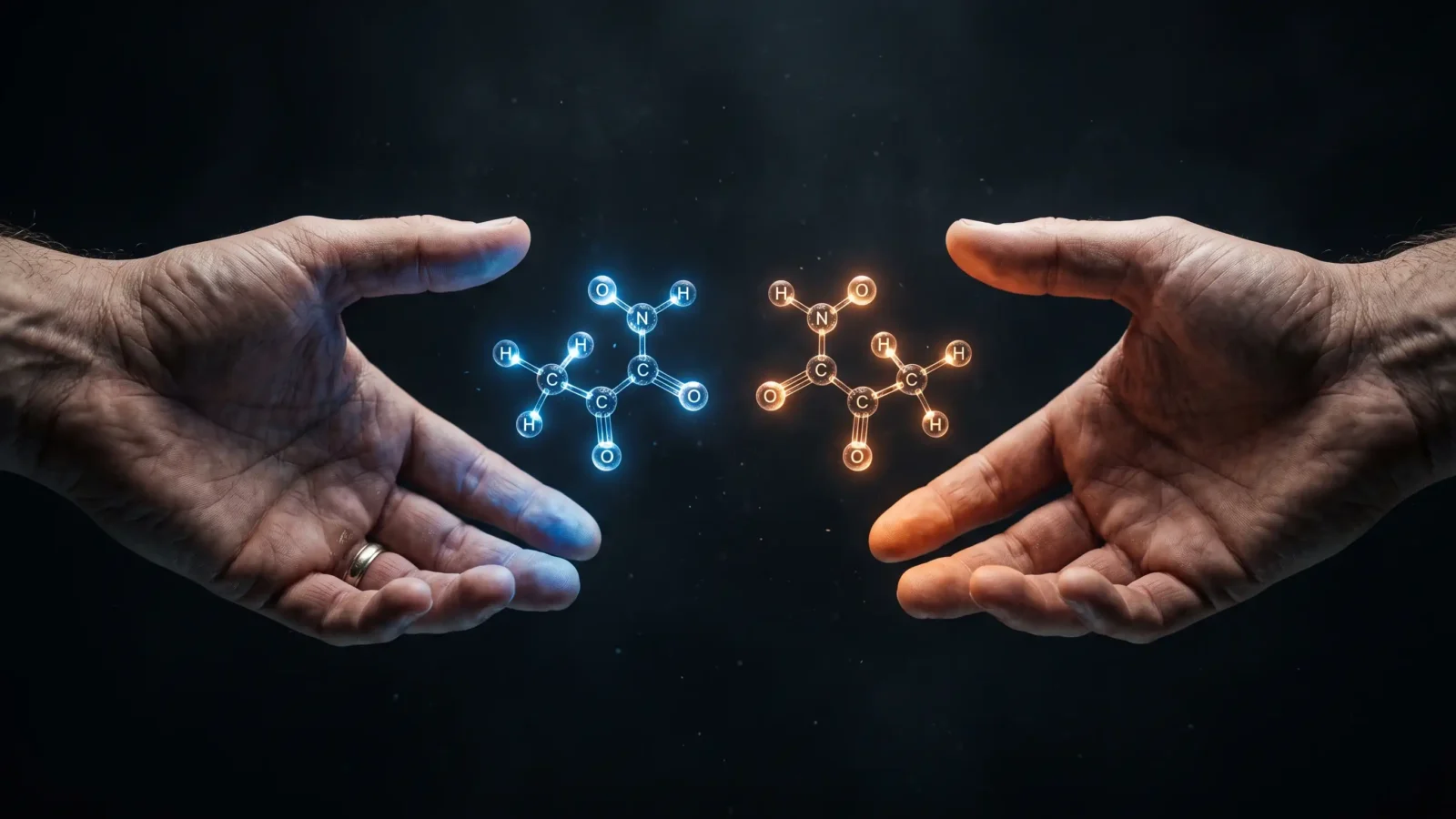
Quick Answer
Chirality is the property of a molecule that makes it different from its own mirror image — just as your left and right hands are mirror images that cannot be perfectly overlaid. Astonishingly, life on Earth uses almost exclusively “left-handed” amino acids and “right-handed” sugars, a one-sided preference called homochirality. Why life chose one handedness over the other remains an unsolved mystery, and it is the key to understanding the danger of so-called mirror life.
Hold up your hands: they are mirror images, identical in every part, yet you cannot lay one perfectly on top of the other. Many of the molecules of life have exactly this property — and life, remarkably, uses only one version. This guide explains what chirality is, why biology is so strictly one-handed, the tragedy that revealed how much it matters in medicine, and what a mirror-image form of life would mean.
What Is Chirality?
Chirality, from the Greek word for “hand,” is a property of objects and molecules that come in two forms that are mirror images of each other but cannot be superimposed. A molecule is chiral if its mirror image is genuinely different from the original — like a left and right glove. The two versions are called enantiomers.
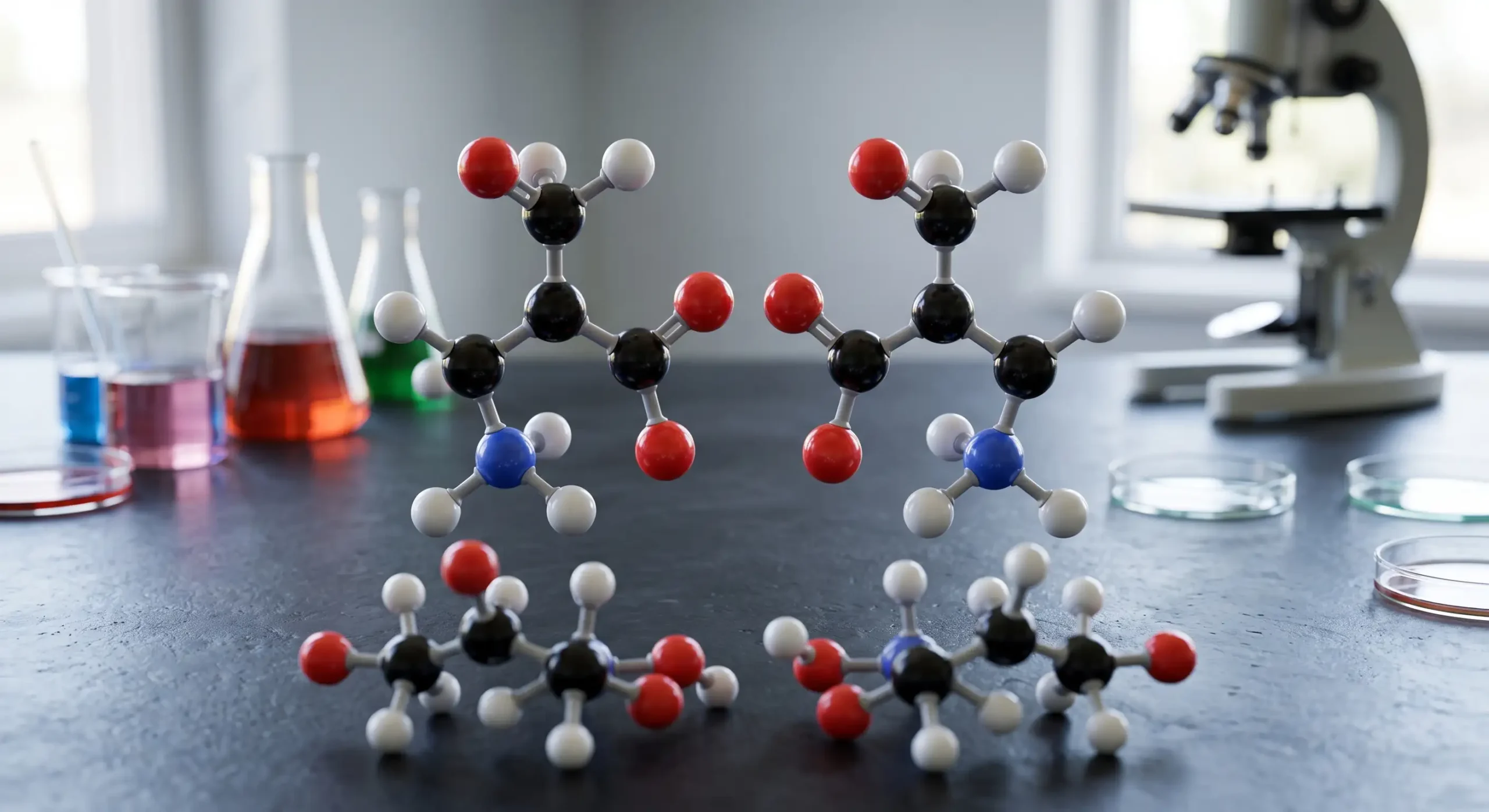
This matters enormously in chemistry because the two mirror-image forms of a molecule can behave very differently when they interact with other chiral molecules. Just as a right hand fits naturally into a right glove but not a left one, a biological molecule will react with one enantiomer but not its mirror twin. Since the machinery of life is built from chiral molecules, handedness is everywhere in biology.
What Makes a Molecule Chiral
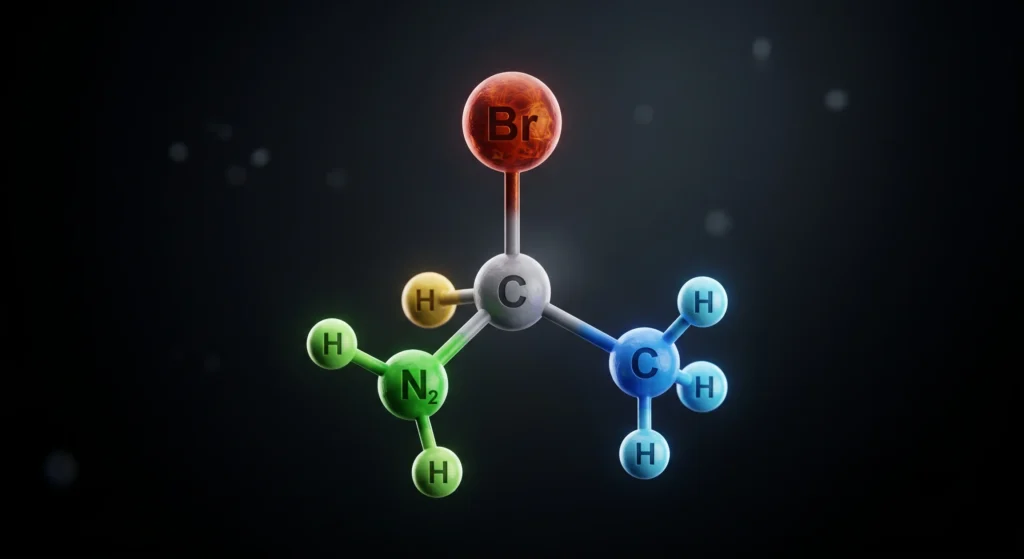
In the vast majority of biological cases, chirality comes down to a single atom. A carbon atom forms four bonds, arranged as a tetrahedron. If all four attached groups are different, there are two distinct ways to arrange them in space — and those two arrangements are mirror images that cannot be rotated into each other. That carbon is called a stereocentre.
Every amino acid except glycine has one. Glycine is the exception because two of its four groups are identical hydrogen atoms, which makes it achiral — and, incidentally, the only amino acid that would be identical in normal and mirror life.
A crucial point that trips people up: two enantiomers have identical melting points, boiling points, densities, solubilities in ordinary solvents, and mass spectra. In an achiral environment they are chemically indistinguishable. Differences appear only when they meet something that is itself chiral — another molecule, an enzyme, a receptor, or circularly polarised light. Handedness only matters in the presence of other handedness.
Reading the Labels: D/L, R/S, and (+)/(−)
Chemistry uses three different naming systems for handedness, they do not map onto each other, and the resulting confusion is responsible for a great deal of misunderstanding about “left-handed life.”
- D and L — an older biochemical convention comparing a molecule’s structure to a reference sugar, glyceraldehyde. This is the system used for amino acids and sugars, and the one biologists still use.
- R and S — the modern, rigorous system, assigning priority to the four groups around a stereocentre and reading their arrangement clockwise (R) or anticlockwise (S). Universal in chemistry, and the standard for naming drugs.
- (+) and (−) — purely experimental, describing which way the molecule physically rotates plane-polarised light. Also written d and l in lower case, which is a genuinely unfortunate collision with the D/L system above.
These labels do not correspond. An L-amino acid is usually S but not always — L-cysteine is R, because the sulphur atom outranks the other groups under the priority rules. And the direction a molecule rotates light has no reliable relationship to either letter system; it must be measured.
This clears up the most common confusion about mirror life. Saying life uses “left-handed amino acids and right-handed sugars” sounds like an inconsistency, as if biology chose left for one and right for the other. It is not. Both follow from the same D/L reference convention applied to different molecular families, and both are the same underlying handedness in structural terms. Mirror life flips both together, which is exactly why it is coherent rather than contradictory.
How Chirality Was Discovered
The whole field began in 1848 with a 25-year-old chemist, a microscope, and a pair of tweezers.
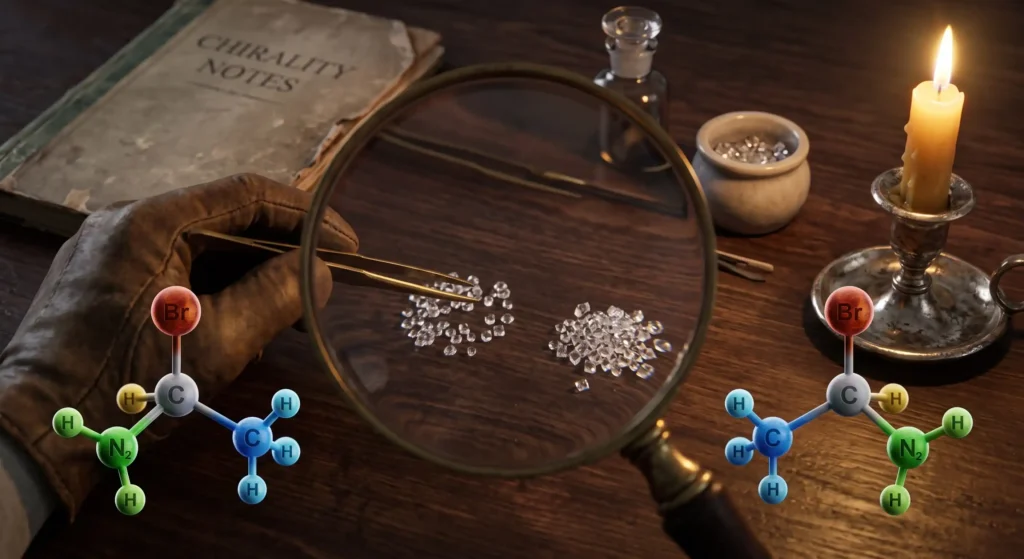
Louis Pasteur was investigating tartaric acid from wine sediment, which had a puzzling property: the natural form rotated polarised light, while a chemically identical synthetic version did not. Examining crystals of the synthetic sodium ammonium tartrate under a magnifying lens, Pasteur noticed something no one had before — the crystals came in two shapes, mirror images of one another.
He separated them by hand, one crystal at a time, into two piles. Dissolved separately, one pile rotated polarised light to the right, the other to the left by exactly the same amount. Mixed together, they cancelled. Pasteur had physically separated the two enantiomers of a molecule and demonstrated that molecular handedness was real, decades before anyone understood the tetrahedral carbon that causes it.
Then he did something that connected chirality to biology permanently. He fed the mixture to mould and observed that the microorganism consumed only one enantiomer, leaving the other untouched. Life, he had shown, could tell left from right.
The instrument that made all of this possible — the polarimeter, which measures the rotation of plane-polarised light — remains the standard tool for measuring optical purity today, and modern chiral chromatography, which physically separates enantiomers on a chiral stationary phase, is a direct descendant of Pasteur’s tweezers.
Left-Handed Amino Acids, Right-Handed Sugars
Here is one of the most striking facts in all of biology: life on Earth is overwhelmingly one-handed. The amino acids that make up proteins come in left-handed (“L”) and right-handed (“D”) forms, but living things use almost exclusively the left-handed versions. Sugars are the opposite story — life uses almost exclusively the right-handed (“D”) forms, including the DNA and RNA backbones built from right-handed sugars.
This consistency is not a loose tendency; it is nearly absolute across every organism on the planet, from bacteria to humans. Our enzymes are shaped to handle left-handed amino acids and right-handed sugars, and they simply cannot process the mirror versions efficiently. This universal handedness is one of the strongest pieces of evidence that all life on Earth shares a single common origin.
The Exceptions That Prove the Rule
“Almost exclusively” is doing real work in that sentence. Biology does use mirror-image molecules — rarely, deliberately, and always for a specific reason. The exceptions are illuminating precisely because of how narrow they are.
- Bacterial cell walls. Peptidoglycan, the mesh that gives bacteria their structural integrity, deliberately incorporates D-alanine and D-glutamate. The reason is defensive: because most enzymes cannot process D-amino acids, the wall resists digestion by the proteases of competitors and hosts. Bacteria discovered chiral armour billions of years ago.
- The human brain. D-serine acts as a signalling molecule in the mammalian nervous system, functioning as a co-agonist at NMDA receptors and playing a role in learning and memory. Its handedness is not an accident but the point — it is recognised by a receptor and not consumed by ordinary metabolism.
- Antibiotics. Several natural antimicrobial peptides, including gramicidin and vancomycin, contain D-amino acids. Again the logic is protease resistance: a peptide weapon that the target cannot chop up lasts longer.
- Amphibian and venom peptides. Some frog skin secretions and cone snail venoms contain single D-amino acid residues introduced by dedicated enzymes called isomerases, which convert one specific L residue after the protein is built.
These exceptions share a theme. Every one of them exploits the fact that the mirror form is invisible to normal enzymes — the same property that makes mirror-image drugs attractive and mirror organisms alarming. Nature reached the same insight the pharmaceutical industry did, and used it sparingly.
There is also a slow, undirected exception. Over long timescales, amino acids gradually convert between handedness in a process called racemisation, drifting toward a 50/50 mixture. Because the rate is temperature-dependent and predictable, archaeologists and palaeontologists use amino acid racemisation as a dating method for shells, bones and teeth — turning the decay of biological handedness into a clock.
The Mystery of Homochirality (why life picked one side)
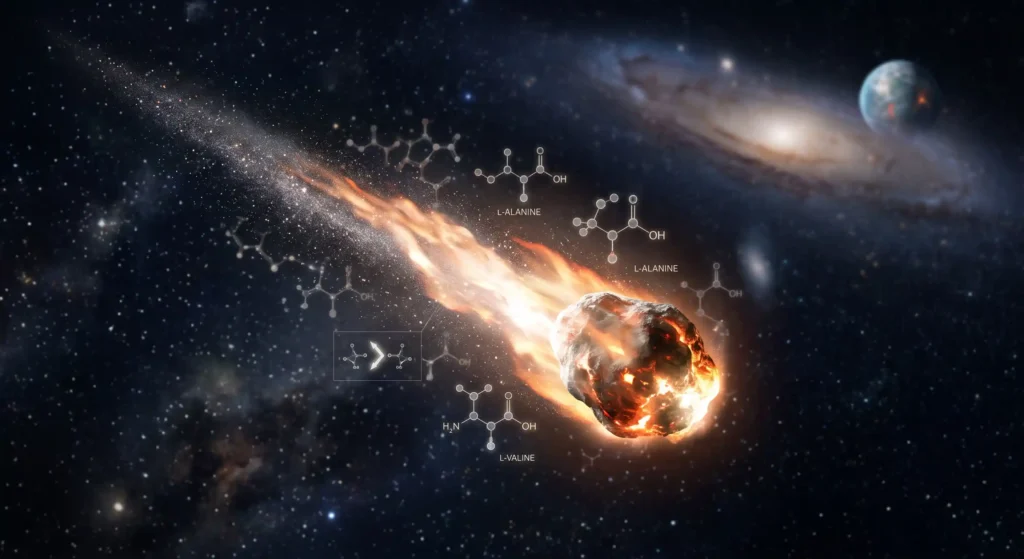
The puzzle is why. When amino acids are made by ordinary chemistry — as in the Miller–Urey experiments or in space — they come out as a roughly 50/50 mix of left- and right-handed forms. Yet life uses only one. How did biology end up so strictly one-sided? This is the mystery of homochirality, and it is unsolved.
Several ideas have been proposed. One is pure chance: an initial tiny imbalance got “locked in” and amplified as life took hold. Another points to space: certain meteorites, such as Murchison, contain a slight excess of left-handed amino acids, and circularly polarised light in star-forming regions can favour one handedness — hinting the bias may have arrived from beyond Earth. A more exotic idea invokes the weak nuclear force, the only force of nature known to distinguish left from right. None of these has been confirmed, and the origin of life’s handedness remains one of biology’s deepest open questions, closely tied to how life began on Earth.
How a Tiny Imbalance Becomes Total
There is a second half to the homochirality puzzle that is often skipped, and it is arguably the more tractable half. Even granting that some process produced a small initial excess — the Murchison meteorite’s left-handed surplus is only a few percent — you still have to explain how a few percent became essentially one hundred. Small biases do not automatically run to completion. Something has to amplify them.
Chemists have found several mechanisms that do exactly that, and this is where the field has made real progress.
- Autocatalysis. In 1953 Charles Frank showed mathematically that if a molecule catalyses its own production while suppressing its mirror twin, any initial imbalance runs away to near-total purity. It was purely theoretical until 1995, when Kenso Soai demonstrated a real reaction doing precisely this — starting from a barely detectable excess and finishing at almost complete single-handedness. The Soai reaction remains the textbook proof that Frank’s mechanism is chemically achievable.
- Attrition and recrystallisation. Grinding a stirred mixture of crystals in solution, so that crystals continually dissolve and regrow, drives the whole system to a single handedness — a process called Viedma ripening. It requires no biology and no exotic conditions, just repeated dissolution and crystal growth, which is exactly what happens in tidal pools, wet-dry cycles and sediments.
- Eutectic enrichment. Some amino acids, when a slightly enriched mixture is partly dissolved, concentrate the excess dramatically in solution. A few percent excess in the solid can become an overwhelming excess in the liquid — for serine, close to complete. Simple evaporation and rehydration can therefore purify handedness on its own.
The current picture, then, is a two-stage story with the second stage much better understood than the first. Some symmetry-breaking event produced a small bias — plausibly from space, plausibly by chance. Ordinary physical chemistry, requiring nothing more than crystallisation and wet-dry cycling on an early Earth, then amplified it to the near-absolute purity biology inherited. The origin of the initial nudge remains genuinely open. Its amplification does not.
Chirality Beyond Biology
You have experienced molecular handedness directly, probably today, and almost certainly without knowing it.
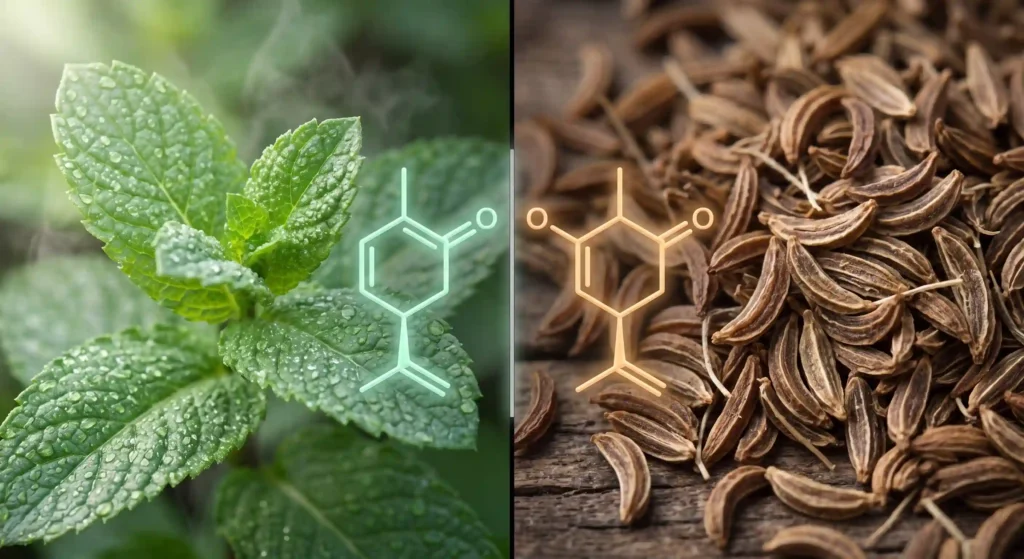
Smell. Carvone is the clearest example. One enantiomer smells unmistakably of spearmint; its mirror image smells of caraway seeds. Same atoms, same bonds, same formula — two completely different sensations, because the receptors in your nose are proteins built from L-amino acids and therefore chiral. Limonene behaves the same way: one form smells of oranges, the other of lemons and turpentine.
Taste. The amino acid asparagine tastes bitter in one form and sweet in the other. Aspartame is intensely sweet as a single enantiomer and bitter as its mirror image, which is why artificial sweeteners must be manufactured to strict optical purity.
Physics and beyond. Chirality is not restricted to chemistry. Quartz crystals grow in left- and right-handed forms. Most climbing plants twine in a species-specific direction. Snail shells coil predominantly one way, with rare mirror-image individuals that famously cannot mate with the normal population — a physical illustration of the mismatch problem. And at the most fundamental level, the weak nuclear force is the only known interaction in physics that distinguishes left from right, which is why it keeps reappearing in origin-of-life speculation.
Why Chirality Matters in Medicine (the thalidomide tragedy)
Chirality is not just academic — it can be a matter of life and death in medicine, because the two mirror forms of a drug can have completely different effects in the body. The most infamous example is thalidomide, a drug marketed in the late 1950s and early 1960s to treat morning sickness in pregnant women.
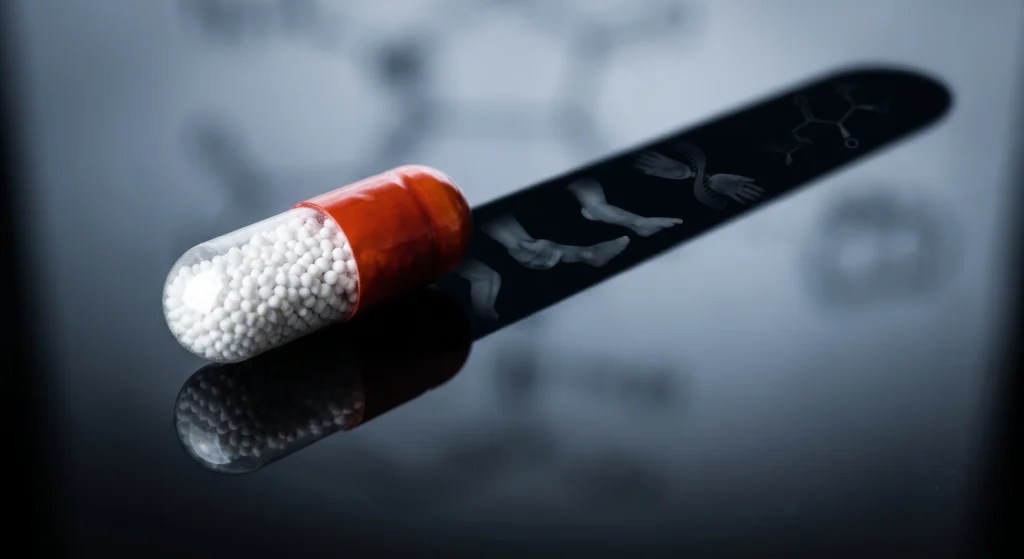
Thalidomide is chiral. One enantiomer provided the intended sedative effect, while the other could cause severe birth defects. The situation was made worse because the two forms can interconvert inside the body, so even a pure single-handed dose became a mixture. The result was a tragedy in which thousands of babies were born with serious malformations. The disaster transformed drug regulation worldwide and made testing the effects of each enantiomer a standard requirement. Today, many medicines are deliberately produced as a single, pure handedness to ensure safety and effectiveness.
The Chiral Drug Industry Today
Thalidomide reshaped pharmacology permanently, and the consequences run through the modern medicine cabinet.
Roughly half of all drugs in clinical use are chiral, and regulators now require that both enantiomers of any new chiral drug be characterised separately for activity and toxicity. That requirement produced a whole strategy known as the chiral switch: taking an existing racemic drug — a 50/50 mixture — and reformulating it as the single active enantiomer.
- Omeprazole → esomeprazole. The single-enantiomer version of a widely used stomach acid drug.
- Citalopram → escitalopram. The antidepressant reformulated to its active form.
- Cetirizine → levocetirizine. The antihistamine, with the inactive half removed.
- Ibuprofen. Still usually sold as a mixture, because the body converts the inactive enantiomer into the active one — a case where the mixture is genuinely fine.
Chiral switches are commercially contentious. Critics point out that the technique conveniently extends patent protection on a drug that already works, and that the clinical benefit over the original mixture is often modest. The scientific rationale — remove a molecule that does nothing useful and may cause side effects — is legitimate; whether it justifies the pricing is a separate argument.
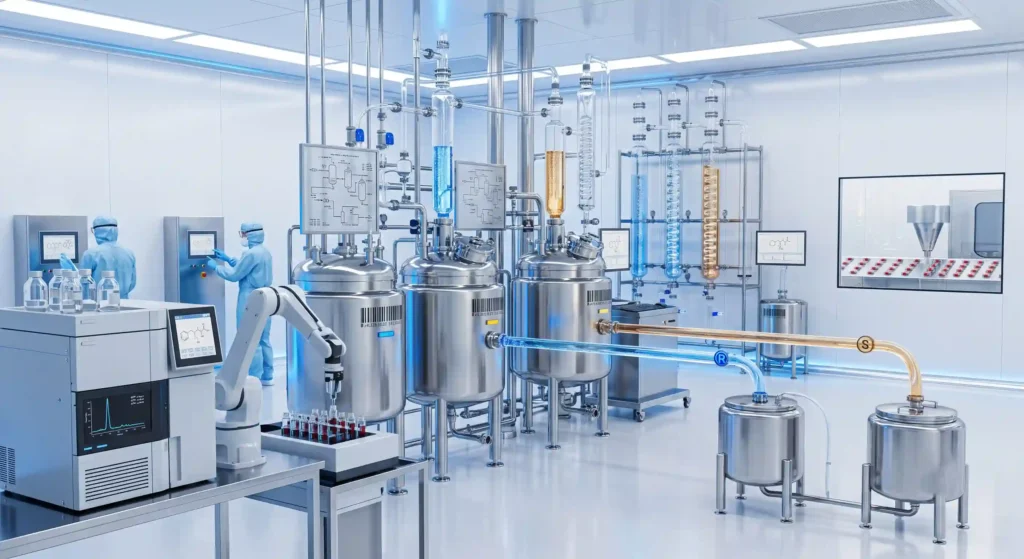
Underneath all of it sits a hard manufacturing problem: making just one enantiomer is difficult, because ordinary chemical reactions produce both in equal amounts. Solving that problem has been worth two Nobel Prizes in Chemistry — in 2001 to William Knowles, Ryoji Noyori and Barry Sharpless for asymmetric catalysis using chiral metal complexes, and in 2021 to Benjamin List and David MacMillan for asymmetric organocatalysis, which achieves the same result with small organic molecules instead of expensive metals. The economics of single-enantiomer medicine rest on that chemistry.
What “Mirror Molecules” Would Mean for Life
Now imagine flipping the handedness of life itself — building an organism from right-handed amino acids and left-handed sugars, the exact mirror image of natural biology. This is the concept of “mirror life,” and it leads to a genuinely alarming possibility explored in what if synthetic mirror life escaped into the wild.
The danger is precisely because of chirality. Our immune systems, enzymes, antibiotics, and predators are all built to recognise normal-handed molecules. A mirror organism would be chemically “invisible” to them — our defences could not grip its mirror-image surfaces, and natural decomposers and predators might be unable to consume it. A mirror microbe could potentially spread unchecked through ecosystems with nothing able to stop it. This is why a group of scientists has recently warned against ever creating mirror life. Building such organisms would draw on the tools of synthetic biology, which is rapidly advancing.
It is worth being precise about the boundary the scientific community has drawn, because it is narrower than the headlines imply. Mirror-image molecules are useful and uncontroversial: because enzymes cannot digest them, mirror peptides make unusually durable drugs, and researchers have been building them since a working mirror version of HIV protease was synthesised in 1992. What is opposed is the specific endpoint of a complete, self-replicating mirror cell — the point at which a helpful molecule becomes an organism nothing can regulate. That distinction, the four-decade path of research behind it, and the governance response since the 2024 warning are set out in our complete guide to mirror life.
Q&A
Because the two mirror-image forms of a molecule can behave completely differently when interacting with other chiral molecules. In biology and medicine this is critical: enzymes process only one handedness, and a drug’s two forms can have different — even harmful — effects, as the thalidomide tragedy showed.
Yes. Chemists can synthesise the mirror-image versions of biological molecules, and researchers have even built mirror-image proteins and fragments of mirror DNA in the lab. Building a complete, self-replicating mirror organism is far harder and has not been done — and many scientists argue it should never be attempted.
Yes. Chiral molecules have been detected in interstellar space, such as propylene oxide, and meteorites contain amino acids with a slight left-handed excess. This has led some scientists to suspect that life’s handedness may have been influenced by chemistry that originated beyond Earth.
Because a drug’s two mirror forms can have different effects — one may heal while the other is inactive or even toxic. Modern pharmaceutical development carefully tests each enantiomer, and many drugs are now sold as a single, pure handedness to maximise benefit and minimise harm.
One of the two mirror-image forms of a chiral molecule. Enantiomers have identical melting points, boiling points, densities and masses, and are indistinguishable in an achiral environment. They behave differently only when interacting with something that is itself chiral — an enzyme, a receptor, another chiral molecule, or circularly polarised light.
Louis Pasteur, in 1848. Examining crystals of sodium ammonium tartrate under magnification, he noticed they came in two mirror-image shapes and separated them by hand with tweezers. Dissolved separately, each rotated polarised light in opposite directions. He then showed that mould consumed only one form — the first demonstration that living things can distinguish left from right.
Yes, a few, and they are functional rather than accidental. D-serine acts as a signalling molecule in the brain, working as a co-agonist at NMDA receptors involved in learning and memory. Bacteria in the gut and elsewhere build D-alanine and D-glutamate into their cell walls. In every case the point of the mirror form is that ordinary enzymes cannot break it down.
D/L is an older biochemical convention comparing a molecule to a reference sugar, still used for amino acids and sugars. R/S is the modern, rigorous system based on ranking the four groups around a stereocentre. They do not map onto each other — most L-amino acids are S, but L-cysteine is R. A third system, (+) and (−), simply records which way the molecule rotates polarised light and must be measured experimentally.
Often, yes — because your taste and smell receptors are proteins, and therefore chiral. Carvone smells of spearmint in one form and caraway in the other. Limonene smells of oranges or of lemons depending on handedness. The amino acid asparagine tastes sweet in one enantiomer and bitter in the other.
Through amplification mechanisms that ordinary chemistry provides. Autocatalysis, demonstrated in the Soai reaction, lets a molecule promote its own formation and drive a barely detectable excess to near-total purity. Attrition-driven recrystallisation (Viedma ripening) achieves the same through repeated dissolving and regrowing of crystals. Some amino acids also concentrate their excess dramatically on partial dissolution. The amplification is well understood; the origin of the initial bias is not.
The Bigger Question
Chirality is the quiet rule that all life on Earth obeys — every organism uses left-handed amino acids and right-handed sugars. But what if we deliberately built life that broke that rule, made entirely from mirror-image molecules? Such an organism could be invisible to the immune systems, enzymes, and predators that keep nature in balance, potentially spreading with nothing able to stop it. That sobering possibility is the focus of what if synthetic mirror life escaped into the wild.
Creating such life would rely on the fast-moving field of synthetic biology. Explore more biological survival questions on the Earth & Humanity Survival hub.
Watch the mirror life scenario to see why a flipped molecule could threaten the entire living world.