 By
By 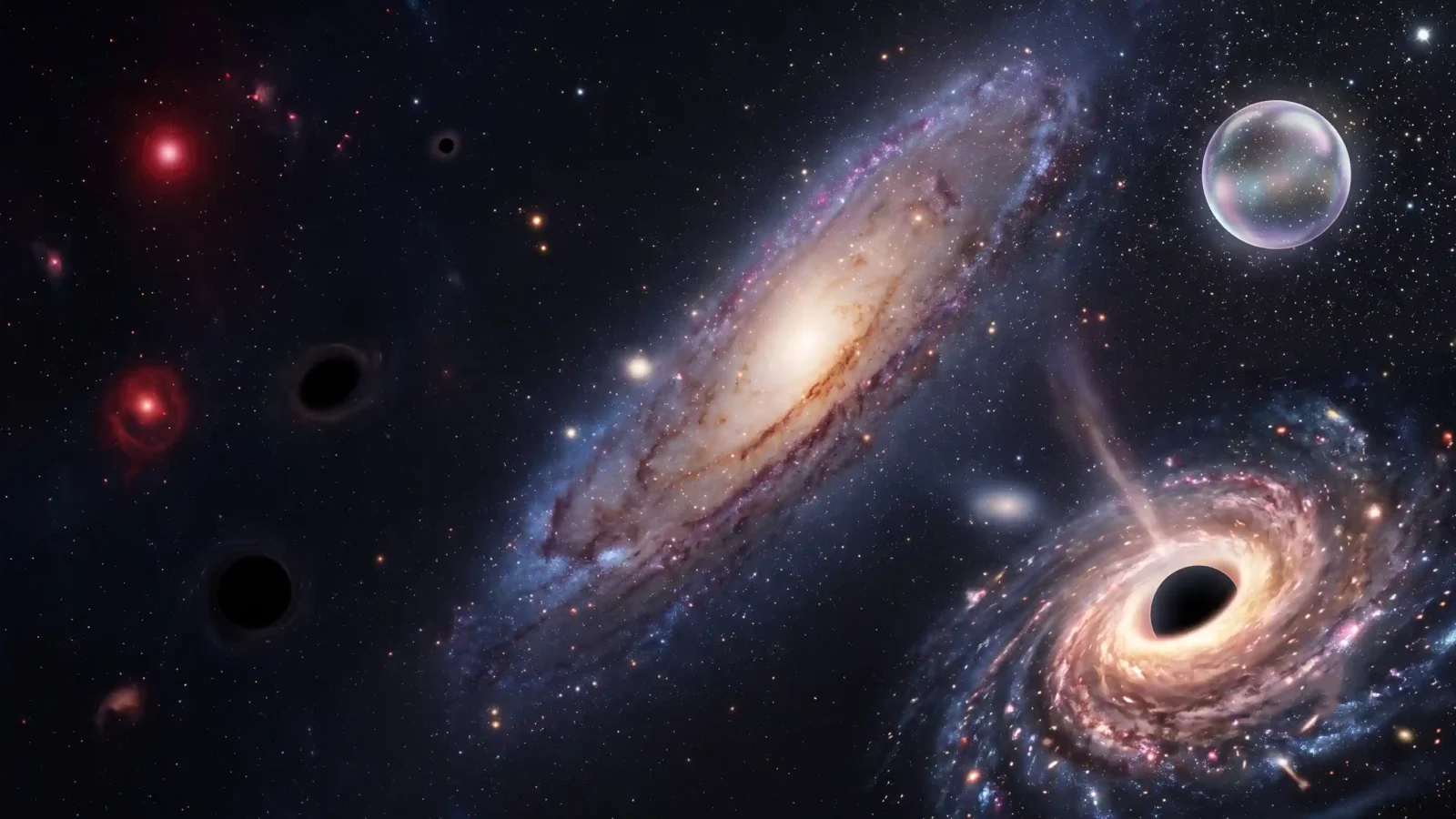
Quick Answer
The universe will almost certainly end — the only real question is how. The leading scientific theory is the “Heat Death,” or Big Freeze, in which the universe keeps expanding until all stars burn out and everything cools toward absolute zero. Other possibilities include the Big Rip (expansion tearing everything apart), the Big Crunch (collapse back into a point), and vacuum decay (an instantaneous rewrite of physics). Current evidence favours the slow, cold Heat Death.
For most of history, people assumed the universe was eternal and unchanging. Modern cosmology says otherwise: it had a beginning, it is changing, and it will have an end. Thanks to our measurements of how the universe is expanding, scientists can now sketch out its possible deaths — some unfolding over timescales so vast they make the current age of the cosmos look like an eyeblink. This guide walks through the main theories and which one the evidence supports.
The Heat Death (Big Freeze)
The Heat Death is the most widely accepted scenario. Because the universe’s expansion is accelerating, driven by a mysterious force called dark energy, galaxies are drifting ever farther apart and the universe is gradually running down. Over immense timescales, star formation will cease as the raw gas runs out; existing stars will burn through their fuel and die; and eventually even the longest-lived stellar remnants will fade.
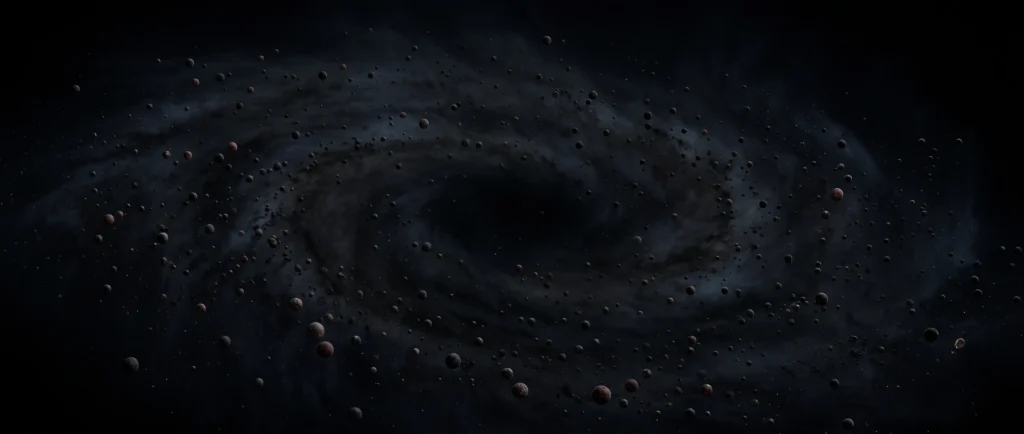
The end state is a cold, dark, nearly empty universe in which all usable energy has been spread out evenly — a condition of maximum entropy where nothing can happen, no work can be done, and the temperature creeps toward absolute zero. It is not a bang but the ultimate whimper: a universe that simply fades to black. This is why it is also called the Big Freeze.
The Big Rip
The Big Rip is a more violent possibility that depends on the nature of dark energy. If dark energy grows stronger over time (a form theorists call “phantom” dark energy), the acceleration would intensify without limit. First it would pull galaxy clusters apart, then individual galaxies, then solar systems, and in the final moments it would overpower the forces holding planets, stars, and even atoms together — literally ripping the fabric of matter apart.
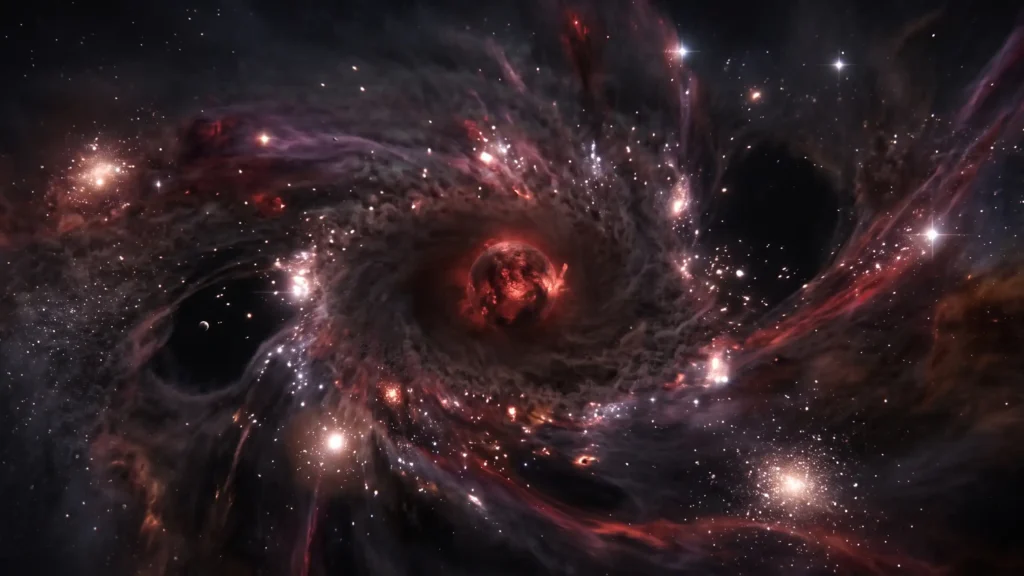
Unlike the slow Heat Death, the Big Rip would have a definite end date, potentially “only” tens of billions of years from now. However, current measurements suggest dark energy behaves more like a constant than a strengthening force, which makes the Big Rip less likely than the Heat Death — though not ruled out.
The Big Crunch
The Big Crunch is, in a sense, the Big Bang in reverse. If the universe contained enough matter and energy, or if dark energy eventually weakened and flipped to pulling things together, the expansion could halt and reverse. Galaxies would fall back toward one another, the universe would heat up as it contracted, and everything would collapse into an incredibly hot, dense point — perhaps even triggering a new Big Bang.
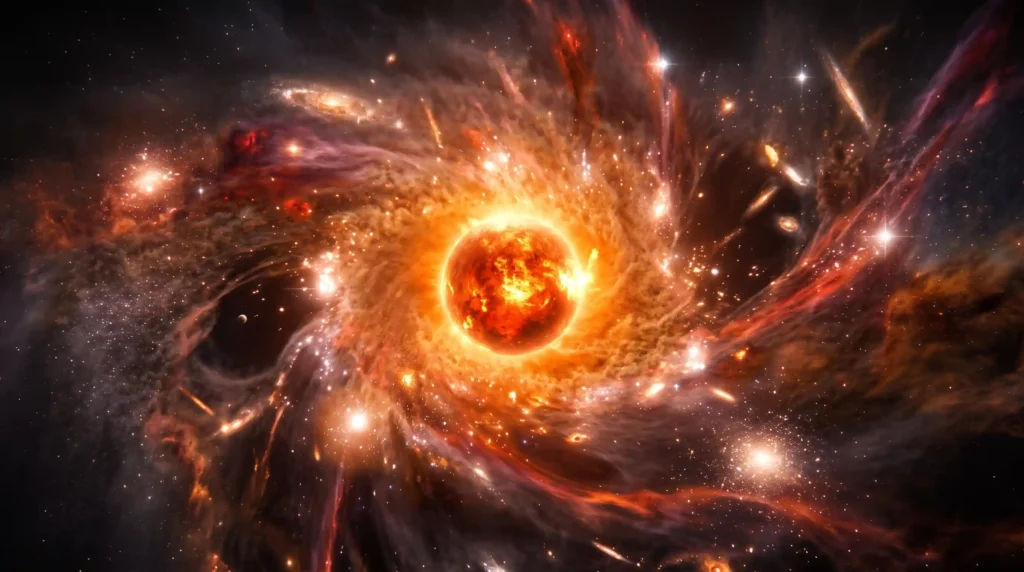
The Big Crunch was taken seriously for much of the 20th century, but the 1998 discovery that the universe’s expansion is accelerating, not slowing, dealt it a serious blow. For a Big Crunch to happen now, dark energy would have to change its behaviour dramatically in the future, which current data do not support.
Vacuum Decay — The Instant End
The most abrupt ending of all is vacuum decay. As explained in our article on the Higgs field, the measured properties of our universe hint that it may be “metastable” — stable for now, but not in its lowest-possible-energy state. If so, a quantum fluctuation could nucleate a bubble of “true vacuum” with different physical laws.
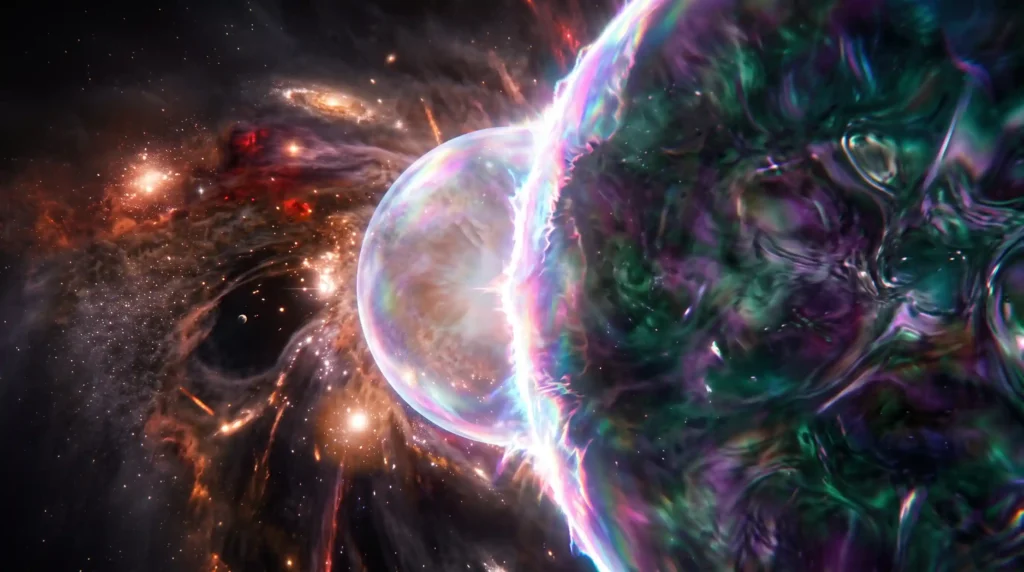
That bubble would expand outward at nearly the speed of light, and inside it the constants of nature would change, making atoms — and therefore everything — impossible. Because it spreads at light speed, there would be no warning: we would simply cease to exist the instant the bubble reached us. This is the scenario explored in what if vacuum decay began in a particle collider. The good news is that even if our vacuum is metastable, the natural timescale for this to occur spontaneously is staggeringly long.
Which Ending Is Most Likely?
Based on everything we currently observe — especially the steady, accelerating expansion driven by dark energy — the Heat Death is the front-runner. The universe appears to be expanding forever at an accelerating rate, with dark energy behaving like a constant. That trajectory leads naturally to a cold, dilute, high-entropy end rather than a collapse or a tearing apart.
- Heat Death (Big Freeze): slow fade to cold and dark — currently the most favoured.
- Big Rip: accelerating expansion tears everything apart — possible if dark energy strengthens.
- Big Crunch: the universe collapses back inward — disfavoured by accelerating expansion.
- Vacuum decay: an instantaneous rewrite of physics — possible but extremely improbable on human timescales.
When Would Each Happen?
The timescales are almost beyond comprehension. The Heat Death unfolds over an extraordinarily long future: star formation winds down over hundreds of trillions of years, the last stars fade over even longer spans, and black holes themselves slowly evaporate via Hawking radiation over a period written with a hundred zeros. The Big Rip, if it happens, could arrive in tens of billions of years; a Big Crunch, if dark energy reversed, would also take many tens of billions of years; and vacuum decay could strike at any moment in theory, but is expected to remain dormant far longer than the universe has so far existed. In every realistic scenario, the end lies unimaginably far beyond the lifespan of Earth, the Sun, or humanity.
Q&A
Not for an almost unimaginably long time. In the favoured Heat Death scenario, the universe becomes cold and dark over timescales far exceeding a trillion years, with the final stages stretching to 10100 years or more. Whatever the ending, it lies vastly beyond the lifetime of the Sun and humanity.
Not in any conventional sense. In the Heat Death, usable energy eventually runs out, making life as we know it impossible. Some speculative ideas imagine far-future civilisations finding workarounds, but these are firmly in the realm of conjecture rather than established science.
Some theories allow it. “Cyclic” models propose the universe could bounce and begin anew, especially in a Big Crunch scenario. Other ideas, like conformal cyclic cosmology, suggest a far-future Heat Death could mathematically resemble a new beginning. These remain speculative and unproven.
In a sense, yes — the accelerating expansion that points toward the Heat Death is happening right now. The universe is already on the long, slow path toward its likely end, but that process is so gradual that it has no effect on daily life or even on the foreseeable future of civilisation.
The Bigger Question
Of all the ways the universe might end, most are slow beyond comprehension — but one could happen in an instant, without warning, anywhere. Vacuum decay would not wait hundreds of trillions of years; a single bubble of altered physics could erase everything at the speed of light. Could we ever trigger it ourselves? That is the question at the heart of what if vacuum decay began in a particle collider.
The roots of that scenario lie in the Higgs field and whether our universe is truly stable. Explore more cosmic fundamentals on the Extreme Physics hub.
Watch the vacuum decay scenario to see the one ending that could come for us tomorrow.