 By
By 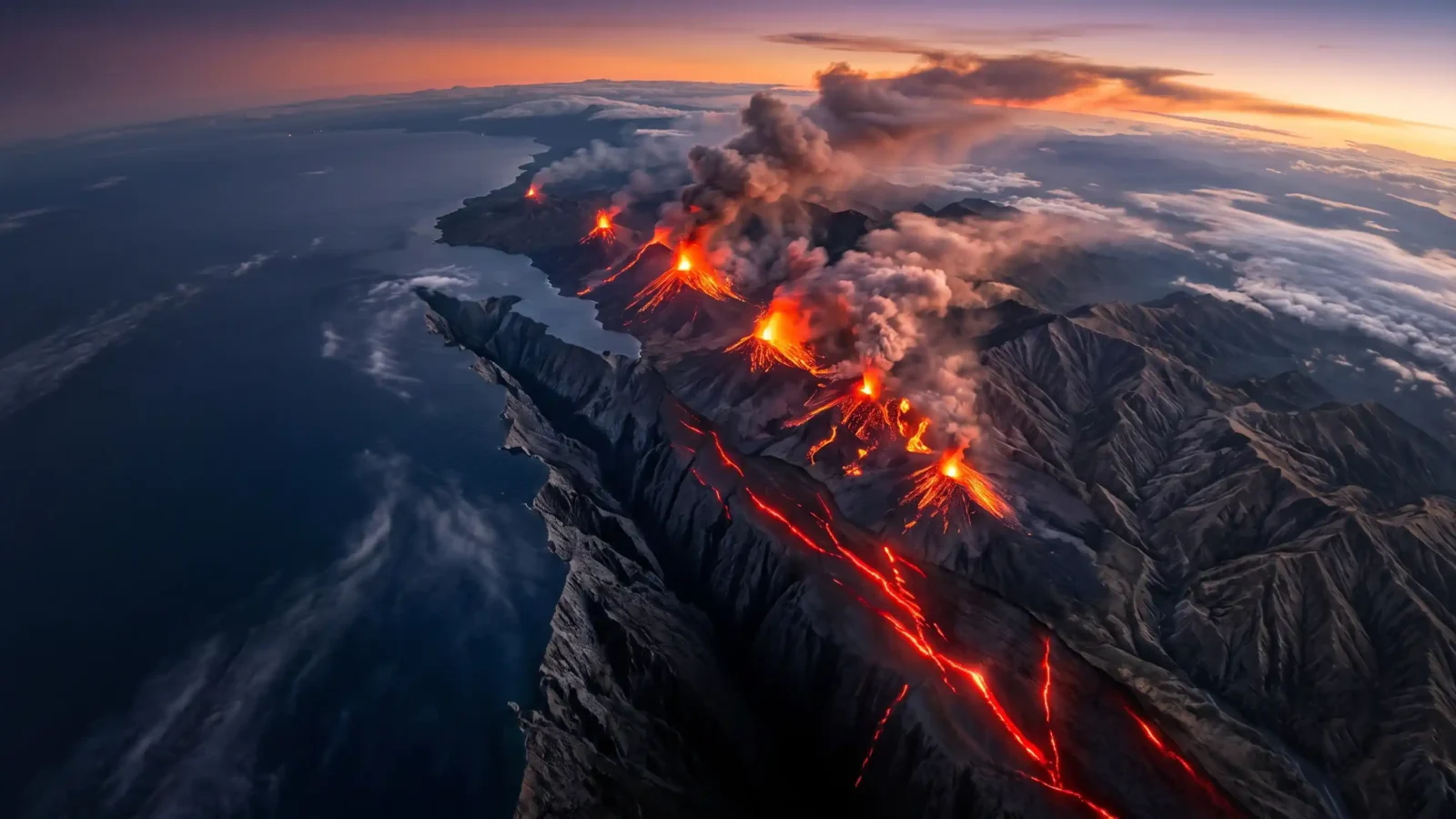
Quick Answer
A subduction zone is where two of Earth’s tectonic plates collide and one plate sinks beneath the other, plunging back down into the planet’s mantle. These zones create the deepest ocean trenches, the most powerful earthquakes, and chains of volcanoes. They are the engine behind the Pacific “Ring of Fire,” and they explain why the deepest place on Earth — the Mariana Trench — exists. This guide explains how subduction works and why it shapes so much of our planet’s most dramatic geology.
Where do tectonic plates go when they collide? At a subduction zone, one of them dives back into the depths of the Earth, recycling the seafloor and powering earthquakes and volcanoes along the way. This guide explains what a subduction zone is, how one plate sinks beneath another, why this creates the deepest trenches, and its role in the planet’s biggest geological hazards.
What Is a Subduction Zone?
A subduction zone is a type of convergent boundary — a place where two tectonic plates move toward each other. Earth’s rigid outer shell is broken into about fifteen to twenty plates that slowly drift on the hotter, flowing rock beneath. When two plates collide, something has to give, and at a subduction zone, one plate bends downward and slides beneath the other, descending into the mantle.
This process is a key part of plate tectonics and the way Earth recycles its surface. Oceanic crust is continually created at mid-ocean ridges, where plates pull apart, and it is consumed at subduction zones, where plates dive back down. Subduction zones are therefore the “destruction” side of the great planetary conveyor belt — and the site of some of the most violent geology on Earth.
How One Plate Sinks Beneath Another
Whether a plate sinks comes down to density. Oceanic crust is denser than continental crust, and it grows denser and cooler as it ages and moves away from the ridge where it formed. When a dense oceanic plate meets a less dense continental plate (or a younger, more buoyant oceanic plate), the denser one loses the contest and bends downward, sliding beneath the other at a typical rate of a few centimetres per year.
As the plate descends, it drags the seafloor down with it, forming a deep trench at the surface where the bending begins. The sinking slab heats up as it plunges into the mantle, and water trapped within it is squeezed out, lowering the melting point of the surrounding rock and generating magma that rises to form volcanoes. The descending slab can continue sinking for hundreds of kilometres into the mantle, eventually being recycled entirely.
Why Subduction Creates the Deepest Trenches
The deepest places on Earth are not in the middle of the oceans but at subduction zones, where the down-going plate pulls the seafloor into a long, narrow gash. These ocean trenches are the deepest features on the planet’s surface.
The deepest of all is the Mariana Trench in the western Pacific, where the Pacific Plate is subducting beneath the smaller Mariana Plate. Its lowest point, the Challenger Deep, plunges to nearly 11,000 metres below sea level — deep enough to swallow Mount Everest with more than two kilometres to spare. The crushing pressure and total darkness of these trenches make them one of the least-explored environments on Earth. What would happen if such a trench were suddenly torn open even further is the dramatic premise of what if the ocean floor cracked open in the deepest trench.
Subduction and the World’s Biggest Earthquakes & Volcanoes
Subduction zones produce both the largest earthquakes and many of the most dangerous volcanoes on Earth. The grinding of one plate beneath another does not happen smoothly; the plates can lock together and build up enormous stress, then suddenly slip. These megathrust earthquakes are the most powerful quakes ever recorded.
- Megathrust earthquakes: the largest quakes on Earth, including the 2004 Sumatra (magnitude ~9.1) and 2011 Tōhoku, Japan (magnitude ~9.0) events.
- Tsunamis: when a megathrust quake suddenly lifts the seafloor, it can displace vast volumes of water, generating devastating tsunamis.
- Volcanic arcs: chains of volcanoes form parallel to the trench as the sinking plate releases water and triggers melting.
- Deep trenches: the deepest points on Earth, carved where the plate bends downward.
This is why subduction zones are among the most closely watched regions on the planet — they pose the greatest risks from earthquakes, tsunamis, and explosive volcanic eruptions.
The “Ring of Fire”
Nearly all of these subduction hazards are concentrated around one vast feature: the Pacific Ring of Fire. This is a roughly horseshoe-shaped belt of subduction zones encircling the Pacific Ocean, stretching from the west coast of the Americas, across the Aleutians, and down through Japan, the Philippines, and Indonesia to New Zealand.
The Ring of Fire is home to about three-quarters of the world’s active volcanoes and the site of around 90% of the world’s earthquakes, including most of the largest ones. It exists because the Pacific Plate and surrounding plates are being subducted around the ocean’s edges. Living on or near the Ring of Fire means living with the constant geological activity that subduction generates — a direct consequence of plates diving back into the Earth.
Q&A
The sinking plate descends into the hot mantle, where it gradually heats up, releases its water, and is eventually recycled into the surrounding rock. Some slabs sink hundreds of kilometres, possibly all the way to the boundary with Earth’s core, completing the cycle of crust creation and destruction.
Yes. The largest tsunamis are usually generated by megathrust earthquakes at subduction zones. When the locked plates suddenly slip, the seafloor can lurch upward, displacing a huge volume of water that races outward as a tsunami — as in the 2004 Indian Ocean and 2011 Japan disasters.
The Mariana Trench in the western Pacific is the deepest, reaching nearly 11,000 metres at the Challenger Deep. It forms where the Pacific Plate subducts beneath the Mariana Plate, making it the deepest known point on Earth’s surface.
The Mariana Trench is so deep because it sits at a subduction zone where a very old, cold, and dense section of the Pacific Plate is sinking steeply beneath another plate. The age and density of the down-going plate, combined with the geometry of the collision, produce an exceptionally deep trench.
The Bigger Question
Subduction zones build the deepest trenches on Earth and unleash its most powerful earthquakes — all where one plate dives beneath another. The deepest of these, the Mariana Trench, plunges nearly eleven kilometres into darkness. What would happen if the ocean floor at such a trench suddenly cracked open even further? That cataclysmic possibility is explored in what if the ocean floor cracked open in the deepest trench.
The deep sea around these zones hosts extraordinary life, which we cover in our article on hydrothermal vents. Discover more about Earth’s restless crust on the Geology hub.
Watch the Mariana Trench scenario to see what lies at the bottom of the world.