 By
By 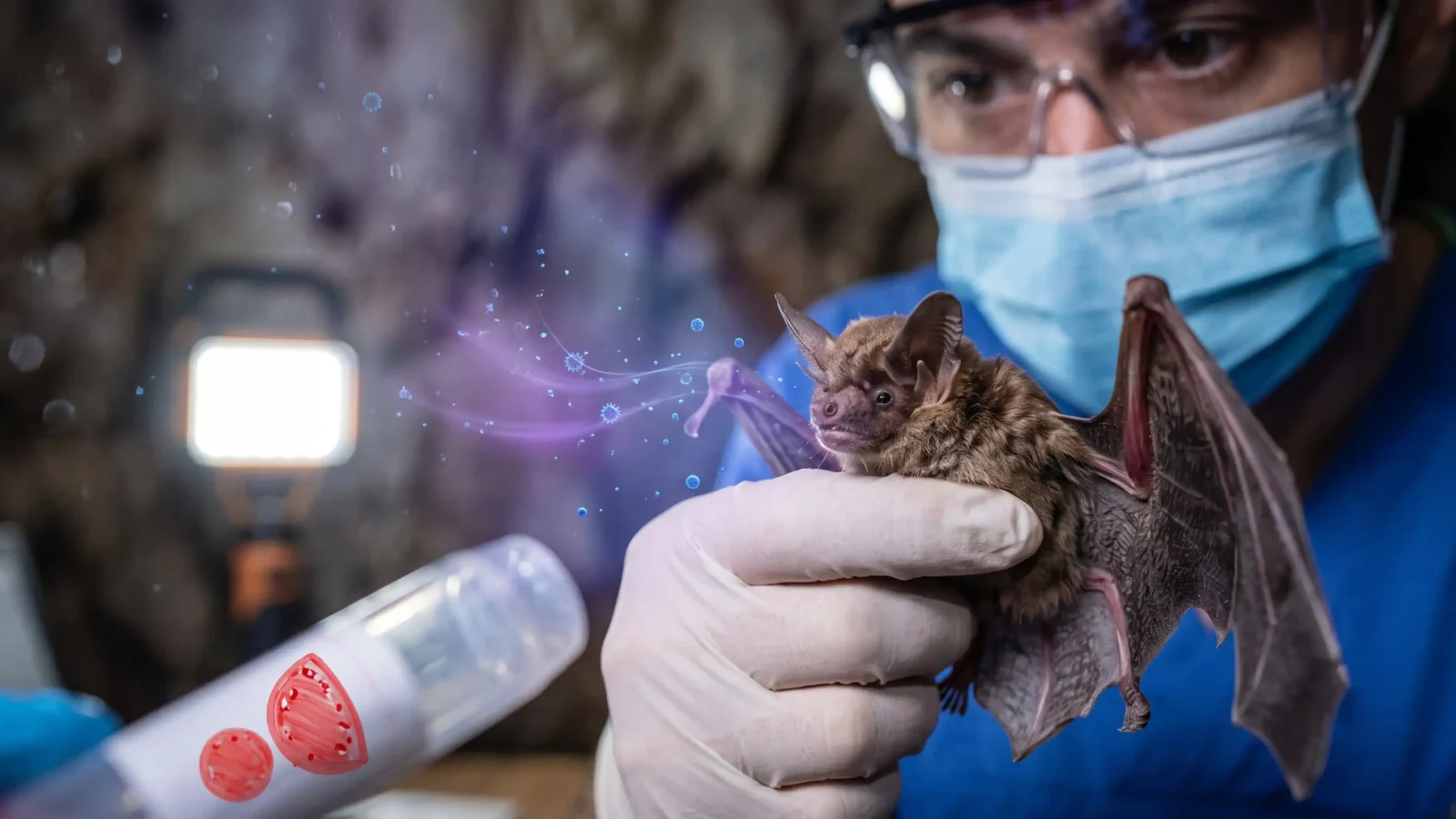
Quick Answer
Most pandemics start when a virus jumps from an animal into a human — a process called zoonotic spillover — and then adapts to spread efficiently from person to person. An outbreak becomes a pandemic when it spreads sustained human-to-human transmission across multiple countries or continents. The journey from a single animal-to-human infection to a global pandemic passes through several stages, and the tipping point is often the ability to spread through the air.
Pandemics can feel like they appear from nowhere, but they follow a recognisable scientific pattern. Understanding how a pathogen makes the leap from wildlife to a worldwide health crisis is the first step to preventing the next one. This guide explains what makes an outbreak a pandemic, how viruses jump species, the stages of spread, and how scientists track and forecast emerging diseases.
What Makes an Outbreak a Pandemic?
Epidemiologists use specific terms for how widely a disease spreads. An outbreak is a sudden rise in cases in a particular place. An epidemic is a larger outbreak spreading actively through a population or region. A pandemic is an epidemic that has spread across multiple countries or continents, affecting large numbers of people. The word comes from the Greek for “all people.”
The key ingredients for a pandemic are a pathogen that is new (or new enough that people lack immunity), that causes illness, and — crucially — that spreads efficiently from person to person. A dangerous germ that cannot transmit between humans may cause isolated infections, but it cannot become a pandemic. It is the combination of novelty and easy transmission that turns a local problem into a global one.
Zoonotic Spillover (how viruses jump species)
The majority of new human diseases originate in animals. A zoonotic spillover is the moment a pathogen crosses from an animal host into a human. Most emerging infectious diseases — including influenza strains, SARS, Ebola, and HIV — began this way. Spillover happens when people come into close contact with animals or their bodily fluids, for example through farming, hunting, wildlife trade, or habitat disruption that pushes wildlife and humans together.
For a spillover to succeed, the pathogen must be able to infect human cells, which often requires it to overcome biological barriers between species. Many spillovers fizzle out after infecting just one or a few people. But occasionally a pathogen lands in a human and is able — sometimes after acquiring mutations — to spread onward, and that is when the danger of a wider outbreak begins.
Why bats are common reservoirs
Bats are frequently implicated as natural reservoirs for viruses that can spill over to humans, and there are good biological reasons. Bats are extraordinarily diverse and numerous, making up a large share of all mammal species. Their unusual immune systems appear to tolerate many viruses without becoming sick, allowing the viruses to persist. And because bats fly and often roost in large colonies, they can spread and mix pathogens over wide areas. Viruses sometimes pass from bats to an intermediate animal before reaching humans, which can give them additional chances to adapt.
The Stages From Spillover to Pandemic
A pathogen typically must clear several hurdles to go from a single spillover to a global pandemic.
- Stage 1 — Spillover: the pathogen jumps from an animal to a human, causing an isolated infection.
- Stage 2 — Limited spread: it infects a few people in close contact, but transmission chains die out.
- Stage 3 — Sustained transmission: mutations or conditions let it spread reliably from human to human.
- Stage 4 — Epidemic: cases grow rapidly within a region.
- Stage 5 — Pandemic: the disease spreads across countries and continents.
At each stage, the pathogen may adapt to its human hosts, becoming better at infecting and transmitting. This is why scientists watch early outbreaks so closely: the transition from limited spread to sustained human-to-human transmission is the critical threshold.
Why Airborne Transmission Is the Tipping Point
Of all the ways a pathogen can spread, transmission through the air is among the most dangerous for sparking a pandemic. Diseases that require direct contact or the exchange of bodily fluids spread relatively slowly and can often be contained by isolating cases. But a pathogen that spreads through the air — in respiratory droplets and tiny airborne particles released by breathing, talking, coughing, or sneezing — can infect many people quickly, often before anyone shows symptoms.
Airborne transmission dramatically raises a pathogen’s reproduction number — the average number of people each infected person infects — which we explain in detail in our article on R0, the basic reproduction number. This is precisely why the prospect of a highly transmissible airborne pathogen is taken so seriously, and it is the focus of the scenario what if an engineered super-virus became airborne.
How Scientists Track and Predict Outbreaks
Modern science has powerful tools for spotting and studying emerging diseases. Global surveillance networks monitor for unusual clusters of illness, and rapid genetic sequencing lets scientists identify a new pathogen and track its mutations within days. The “One Health” approach recognises that human, animal, and environmental health are linked, so researchers monitor wildlife and livestock for pathogens with pandemic potential before they ever reach people. Newer techniques, such as testing wastewater for traces of pathogens, can detect spread across a community early.
Predicting exactly which pathogen will cause the next pandemic remains difficult — public health experts even use the placeholder “Disease X” for an unknown future threat. But by understanding the patterns of spillover and spread, scientists can prioritise the riskiest pathogens, develop vaccines and treatments in advance, and respond faster when an outbreak begins.
Q&A
Public health experts most often point to influenza and coronaviruses as leading candidates, because they mutate readily and spread through the air. They also plan for an unknown threat they call “Disease X.” No one can predict the exact pathogen, which is why broad surveillance and preparedness are emphasised.
Historically, major pandemics have occurred a few times per century, but the frequency of new disease emergence has been rising, driven by factors like population growth, global travel, and increased contact between people and wildlife. Smaller epidemics occur much more frequently.
We cannot eliminate the risk entirely, but we can reduce it. Strong surveillance, reducing risky human-wildlife contact, rapid response to early outbreaks, and pre-developing vaccines and treatments all make pandemics less likely and less severe. Early detection is the single most powerful tool.
The Black Death (plague) in the 14th century killed an estimated 75–200 million people, among the deadliest in history by proportion. The 1918 influenza pandemic killed tens of millions, and HIV/AIDS has caused tens of millions of deaths over decades. Each illustrates how devastating a widely transmissible disease can be.
The Bigger Question
Natural pandemics begin with a chance spillover and only become global when a pathogen learns to spread efficiently — especially through the air. That raises a sobering question about the era of advanced biotechnology: what if a pathogen’s airborne transmissibility were not left to chance, but engineered? The scientific and ethical stakes of that possibility are explored in what if an engineered super-virus became airborne.
To understand the single number that determines how fast a disease spreads, read what is R0, and explore more on protecting humanity at the Earth & Humanity Survival hub.
Watch the super-virus scenario to understand why transmissibility is the factor that matters most.